Join me as we hike the top
Urban Trails of Minnesota
Urban hiking in Minnesota thrives along lakes, river trails, and wooded parks embedded in cities like Minneapolis and Saint Paul. The state’s extensive trail networks provide year-round opportunities, from summer lake walks to winter snow hikes. Urban hiking is outdoorsy, clean, and expansive.
Minnehaha Falls & Creek Trails – Minneapolis
Minnehaha Falls is one of Minnesota’s most iconic urban hiking destinations, located directly within Minneapolis. Centered around a beautiful 50-foot waterfall on Minnehaha Creek, this park offers a rare combination of city accessibility and dramatic natural scenery. Despite being surrounded by neighborhoods, Minnehaha feels like a woodland gorge retreat, with limestone cliffs, shaded paths, and rushing water creating an immersive nature experience inside the city.
The trail system includes paved and dirt routes that follow Minnehaha Creek through a wooded corridor toward the Mississippi River. Hikers pass beneath towering trees, along rocky creek banks, and through quiet forest pockets where birds and wildlife are commonly seen. The terrain is easy to moderate, making this hike welcoming for casual walkers while still offering plenty of scenic reward.
The highlight is reaching Minnehaha Falls itself, where water cascades over a rocky ledge into a gorge below. Spring and early summer are especially beautiful when water flow is strongest, while autumn adds brilliant color to the creek valley. Minnehaha Falls is one of the best examples of Minnesota urban hiking: waterfall beauty, forest atmosphere, and accessibility right in Minneapolis.
Mississippi Gorge Regional Park Trails – Minneapolis/St. Paul
The Mississippi Gorge Regional Park is one of the Twin Cities’ most scenic and unique near-urban hiking landscapes, protecting the dramatic river corridor where the Mississippi cuts through limestone bluffs. These trails offer hikers sweeping river views, wooded ridgelines, and a surprising sense of wilderness in the heart of a major metro area. The gorge is one of the defining natural features of Minneapolis and St. Paul, providing world-class river hiking close to downtown.
The trail network winds along bluff edges, through shaded hardwood forest, and down toward river-level paths. Hikers can explore sections near the Stone Arch Bridge, hidden overlooks above the water, and quiet wooded stretches that feel far removed from the city. The terrain is mostly moderate, with rolling elevation changes along the bluffs and constant scenic variety.
The greatest reward of hiking the Mississippi Gorge is the blend of urban skyline and wild river landscape. You may see eagles soaring above the water, kayakers below, and historic bridges spanning the gorge. Autumn hikes are especially spectacular, with fall foliage lighting up the bluff forests. The Mississippi Gorge trails represent Minnesota urban hiking at its finest: dramatic river scenery woven directly into city life.
Pike Island Loop – Fort Snelling State Park
Fort Snelling State Park is one of Minnesota’s most important near-urban hiking destinations, located right at the meeting point of the Mississippi and Minnesota Rivers near Minneapolis–St. Paul International Airport. Despite being surrounded by highways and city development, the park feels like a broad river wilderness corridor, with wooded floodplain forests, riverbanks, and peaceful trails. Pike Island Loop is one of the park’s most beloved hikes, offering a unique experience of walking through the heart of Minnesota’s historic river confluence..
The Pike Island Loop Trail follows an easy, mostly flat route through cottonwood forest and riverside scenery. Hikers walk beneath tall trees, alongside quiet backwaters, and through shaded floodplain environments where wildlife thrives. The trail is accessible for many hikers, making it a favorite for families, casual walkers, and anyone seeking a serene natural escape close to the city.
The highlight of Pike Island hiking is the feeling of being surrounded by river landscapes on all sides, with the Mississippi flowing nearby and the Minnesota River joining it at the island’s edge. Eagles, herons, and other birds are commonly seen, especially in spring and fall migration seasons. Autumn brings stunning color to the floodplain forest, while summer offers cool shade and breezes off the water. Pike Island Loop is one of Minnesota’s finest near-urban hikes, offering peaceful river wilderness right at the core of the Twin Cities.
Theodore Wirth Park Trails – Minneapolis
Theodore Wirth Park is one of the largest and most important urban hiking destinations in Minneapolis, offering miles of trails, lakes, woodland hills, and year-round outdoor recreation. This expansive park system provides a true forest escape within city limits, making it one of the best places in Minnesota to experience hiking without leaving the metro area. Wirth Park is especially beloved for its variety, combining rolling hills, prairie areas, and scenic lake views in one accessible urban wilderness.
The trail network includes easy nature paths, longer loops, and moderate climbs through wooded terrain. Hikers travel through dense hardwood forest, along lakeshores, and across open meadows, with constant opportunities to spot birds, deer, and other urban wildlife. The terrain is more varied than many expect for a city park, with enough elevation change to feel like a real hike while remaining approachable for everyday outings.
One of the highlights of Theodore Wirth hiking is the park’s ability to feel both expansive and peaceful despite being inside Minneapolis. In autumn, the forest canopy becomes brilliant with fall foliage, while winter transforms the park into a major hub for snowshoeing and cross-country skiing. Sunrise and evening walks offer quiet moments beside the lakes and wooded ridges. Theodore Wirth Park is one of Minnesota’s premier urban hiking treasures, offering deep nature immersion right in the city.
Afton State Park Ridge Trails – Hastings area
Afton State Park is one of Minnesota’s finest near-urban hiking destinations, located along the St. Croix River just southeast of the Twin Cities near Hastings. Known for its rolling wooded hills, prairie overlooks, and river bluff scenery, Afton offers hikers one of the most beautiful natural escapes close to Minneapolis–St. Paul. The park feels peaceful and expansive, with landscapes that transition from hardwood forest to open grassland ridges overlooking the river valley.
The ridge trail system is moderately challenging, featuring steady climbs and descents through forested slopes and along bluff-top paths. Hikers enjoy panoramic views across the St. Croix River corridor, with open hilltops providing a sense of space rare so close to the city. Wildlife sightings are common, including deer and countless bird species that thrive in the park’s mixture of prairie and forest habitat.
The highlight of hiking at Afton is reaching the ridge overlooks, where sweeping vistas stretch across the river valley and rolling Wisconsin hills beyond. Autumn is especially spectacular, as fall foliage blankets the bluffs in brilliant color. Spring brings wildflowers across the prairies, while summer offers breezy open landscapes above the forest canopy. Afton State Park is one of Minnesota’s best near-urban hikes, offering ridge-and-river beauty just a short drive from the Twin Cities.
Jay Cooke State Park Swinging Bridge & River Trails – Duluth area
Jay Cooke State Park is one of Minnesota’s most dramatic hiking destinations, located southwest of Duluth along the rugged St. Louis River. Famous for its powerful rapids, rocky gorge terrain, and the iconic swinging bridge, Jay Cooke offers hikers an unforgettable near-urban wilderness adventure close to the Lake Superior region. The park’s landscape feels wild and mountainous, with exposed rock, rushing water, and dense northern forest creating one of the most scenic hiking environments in the state.
The trail system includes moderate routes that follow the river gorge, climb rocky overlooks, and weave through pine and hardwood forest. Hikers cross the swinging bridge high above the rushing river, then continue along paths that reveal stunning views of rapids crashing through boulder-strewn channels. The terrain is rugged, with uneven rock footing that gives the hike a true adventure feel.
The highlight of Jay Cooke hiking is the dramatic river scenery — the roaring St. Louis River rapids framed by ancient volcanic rock create one of Minnesota’s most powerful natural settings. Autumn is especially breathtaking, with northern forest foliage glowing above the gorge. Spring brings strong water flow, while summer offers cool forest shade near the river. Jay Cooke State Park is one of Minnesota’s crown jewel near-urban hikes, offering gorge wilderness and iconic river views close to Duluth.
Gooseberry Falls State Park Trails – North Shore
Gooseberry Falls State Park is one of Minnesota’s most iconic hiking destinations, located along the North Shore of Lake Superior near Two Harbors, not far from Duluth. Famous for its dramatic waterfalls cascading over dark volcanic rock, Gooseberry offers hikers an unforgettable blend of rushing river scenery, rugged gorge terrain, and stunning lakeshore views. Despite being close to North Shore communities and highway access, the park feels like a wild northern wilderness of waterfalls and evergreen forest.
The trail system includes easy and moderate routes that follow the Gooseberry River through a series of powerful falls and rapids. Hikers walk along rocky overlooks and footbridges, enjoying constant views of cascading water rushing toward Lake Superior. The terrain is accessible for many hikers, but the dramatic scenery makes it feel like a world-class outdoor destination.
The highlight of Gooseberry Falls hiking is the spectacular waterfall sequence itself, especially the Upper, Middle, and Lower Falls. In spring, snowmelt creates roaring water flow, while autumn transforms the surrounding forest into brilliant color. The trail also leads toward Lake Superior’s shoreline, where hikers can experience expansive open-water vistas. Gooseberry Falls is one of Minnesota’s finest near-urban hikes, offering waterfall and lakeshore beauty close to Duluth and the North Shore corridor.
Lebanon Hills Regional Park Trails – Eagan
Lebanon Hills Regional Park is one of the largest and most popular near-urban hiking destinations in the Twin Cities metro area, located in Eagan. This expansive park features miles of trails through hardwood forest, wetlands, lakes, and rolling hills, providing a true wilderness-style escape within suburban Minneapolis–St. Paul. Lebanon Hills is especially beloved for its size and variety, offering hikers endless opportunities to explore without traveling far from the city.
The trail network includes easy loops as well as longer routes that wind through oak woodland, past quiet ponds, and across marsh edges. The terrain is mostly moderate, with gentle elevation changes that make the hikes engaging but accessible for many skill levels. Wildlife is abundant, and hikers often see deer, turtles, owls, and countless bird species throughout the park’s protected habitats.
One of the highlights of hiking at Lebanon Hills is the park’s peaceful, immersive atmosphere despite its proximity to major metro neighborhoods. Autumn brings stunning foliage across the forest trails, while winter turns the park into a popular snowshoeing and ski destination. Spring and summer provide lush greenery and wildflower blooms along wetland corridors. Lebanon Hills Regional Park is one of Minnesota’s best urban-adjacent hiking treasures, offering deep nature immersion close to the Twin Cities.
Split Rock Lighthouse State Park Coastal Trails – North Shore
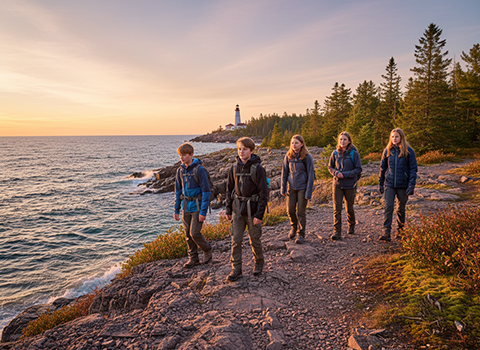
Split Rock Lighthouse State Park is one of Minnesota’s most breathtaking coastal hiking destinations, located along the rugged North Shore of Lake Superior near Two Harbors. Famous for its historic lighthouse perched above dramatic cliffs, this park offers hikers an unforgettable combination of rocky shoreline scenery, evergreen forest trails, and sweeping open-water views. Despite being accessible from Duluth and nearby communities, Split Rock feels wild and timeless, showcasing the raw beauty of Lake Superior’s coast.
The trail system includes easy to moderate routes that follow the shoreline bluffs and weave through pine and birch forest. Hikers walk along rocky cliffs where waves crash below, with constant views of the lighthouse and the endless lake horizon stretching to the east. The terrain is classic North Shore hiking: uneven rock in places, cool lake breezes, and a sense of rugged northern wilderness.
The highlight of hiking at Split Rock is the iconic lighthouse view combined with the dramatic coastal atmosphere. Autumn is especially spectacular, with fiery fall foliage contrasting against deep blue lake waters. Sunrise hikes are unforgettable, as golden light spreads across Lake Superior. Split Rock Lighthouse State Park is one of Minnesota’s finest near-urban hikes, offering historic landmark scenery and world-class coastal trail beauty along the North Shore.
Minnesota River Valley Trails – Bloomington / Eden Prairie
The Minnesota River Valley trail system offers one of the best true near-urban hiking experiences in the Twin Cities metro area, stretching through Bloomington, Eden Prairie, and surrounding communities. This river corridor protects forests, wetlands, and bluff landscapes that feel surprisingly wild given their proximity to suburban neighborhoods and major highways. Hiking here provides an immersive escape into river-bottom wilderness just minutes from Minneapolis–St. Paul.
The trails are generally moderate, winding through wooded floodplain forest, along bluff edges, and past wetlands rich with wildlife. Hikers often spot deer, eagles, herons, and countless bird species thriving in the river valley ecosystem. The terrain includes gentle elevation changes, with occasional climbs to overlooks that reveal expansive views of the Minnesota River winding through its broad valley.
One of the highlights of hiking the Minnesota River Valley is the sense of space and solitude it offers within the metro region. In autumn, the valley forests glow with brilliant color, while spring brings fresh greenery and migratory bird activity. Sunrise and evening walks are especially peaceful, with mist rising above wetlands and soft light filtering through trees. The Minnesota River Valley Trails represent Minnesota urban-adjacent hiking at its best: scenic, accessible, and deeply connected to the state’s great river landscapes.