The Hiking Man Hikes Wisconsin

The Urban Trail Hiker
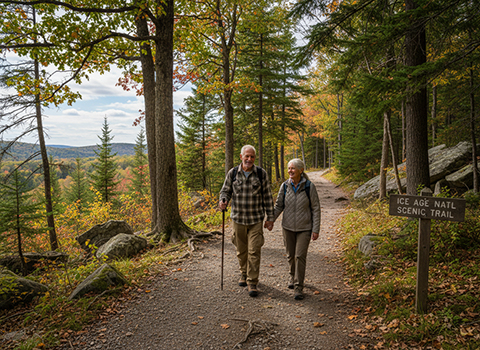
Hiking in Wisconsin offers a scenic and peaceful journey through rolling hills, dense forests, glacial landscapes, and picturesque shorelines. The state’s extensive trail network includes gems like the Ice Age National Scenic Trail, which winds over 1,000 miles through terrain shaped by ancient glaciers, featuring kettle lakes, moraines, and wooded ridges. In Devil’s Lake State Park, hikers can tackle rocky bluffs and enjoy sweeping views over the lake below, especially beautiful in the fall. Along the shores of Lake Michigan and Lake Superior, trails such as those in Peninsula State Park and Apostle Islands National Lakeshore offer stunning coastal vistas and quiet wilderness. Whether exploring inland forests or lakeside cliffs, Wisconsin’s trails provide hikers with a varied and rewarding outdoor experience.

Devil’s Lake State Park – East Bluff Trail

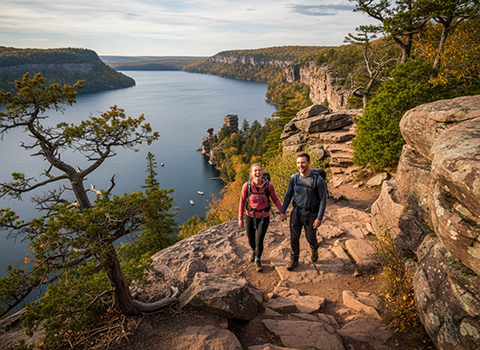
Hiking the Devil’s Lake State Park East Bluff Trail is one of the most iconic outdoor experiences in Wisconsin, offering dramatic scenery from start to finish. The trail follows the rim of the eastern quartzite bluff high above Devil’s Lake, providing sweeping views of deep blue water framed by steep rock walls and dense forest. As you climb from the lakeshore, the elevation gain is immediate and rewarding, quickly delivering hikers to panoramic overlooks that showcase the park’s rugged geology and glacially carved landscape.
Devil’s Lake East Bluff Trail

The East Bluff Trail is known for its rugged, adventurous character, featuring stone staircases, narrow rock passages, and sections that require careful footing. Large boulders and exposed rock faces add to the sense of exploration, making this trail especially engaging for hikers who enjoy a more hands-on route. Along the way, well-placed observation points invite pauses to take in views across the lake, while interpretive signs help explain the unique quartzite formations and natural history of the Baraboo Range.

Despite its popularity, the East Bluff Trail offers moments of quiet solitude, particularly in the early morning or on weekdays. The mix of forest shade, open cliff edges, and ever-changing perspectives keeps the hike visually interesting throughout. Whether completed as an out-and-back or combined with other trails to form a loop around the lake, hiking the East Bluff Trail delivers a classic Devil’s Lake experience—challenging, scenic, and deeply memorable for anyone who enjoys dramatic terrain and expansive views..

Ice Age National Scenic Trail (Multiple Sections)

Hiking the Ice Age National Scenic Trail is a journey through some of the most geologically distinctive landscapes in the Midwest. Stretching roughly 1,200 miles across Wisconsin, the trail traces the edge of the last continental glacier, weaving through forests, prairies, wetlands, and dramatic glacial formations. Each segment feels different, but all share a sense of quiet immersion in nature, where rolling terrain and subtle elevation changes reflect the ancient forces that shaped the land thousands of years ago.
Ice Age National Scenic Trail

One of the defining features of the Ice Age Trail is its variety. Hikers may pass through the steep kettles and ridges of the Kettle Moraine, cross open farmland under wide skies, or wind through dense hardwood forests rich with wildlife. Well-marked segments and frequent trailheads make it accessible for short day hikes as well as longer backpacking trips. Along the way, interpretive signs often highlight moraines, eskers, and kettles, helping hikers connect what they see underfoot to the glacial history that defines the trail’s identity.

Beyond scenery, hiking the Ice Age National Scenic Trail offers a strong sense of continuity and purpose. Because it links hundreds of miles of protected and community-supported land, each step feels like part of a larger story—one that blends conservation, history, and outdoor recreation. Whether you’re exploring a quiet woodland segment or tackling a longer stretch over multiple days, the Ice Age Trail delivers a deeply rewarding experience that emphasizes reflection, discovery, and the enduring imprint of the Ice Age on Wisconsin’s landscape.

Parfrey’s Glen (near Devil’s Lake)

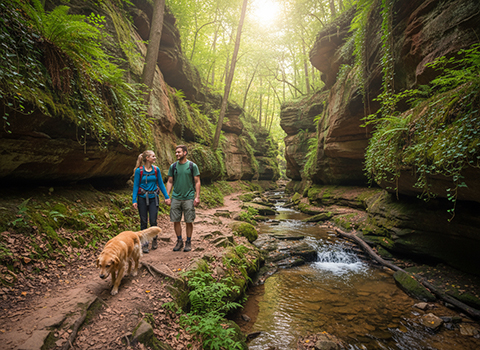
Hiking Parfrey’s Glen State Natural Area offers a strikingly different experience from the exposed bluffs and overlooks nearby, immersing hikers in a cool, shaded gorge carved by ancient meltwater. The trail follows a narrow ravine where steep rock walls rise on both sides, creating a dramatic, enclosed atmosphere. As you move deeper into the glen, the sound of trickling water and the damp, moss-covered stone give the hike a quiet, almost cathedral-like feel that contrasts beautifully with the open landscapes of Devil’s Lake.
Parfrey’s Glen trail

The route itself is short but engaging, requiring careful footing over uneven rock steps, stream crossings, and slick surfaces—especially after rain. Instead of switchbacks or long climbs, the trail challenges hikers with natural obstacles formed by fallen boulders and eroded bedrock. Ferns, lichens, and shade-loving plants thrive in the moist microclimate of the gorge, making Parfrey’s Glen particularly appealing on warm summer days when the temperatures feel noticeably cooler inside the ravine.

At the end of the trail, hikers are rewarded with a small but scenic waterfall cascading over layered stone, a fitting focal point for the journey. The return hike retraces the same path, offering a second look at the gorge’s textures and formations from a new perspective. Though brief, hiking Parfrey’s Glen feels intimate and adventurous, providing a memorable glimpse into the geological forces that shaped the region and a peaceful complement to the more strenuous hikes around Devil’s Lake.

Copper Falls State Park – Doughboys Trail

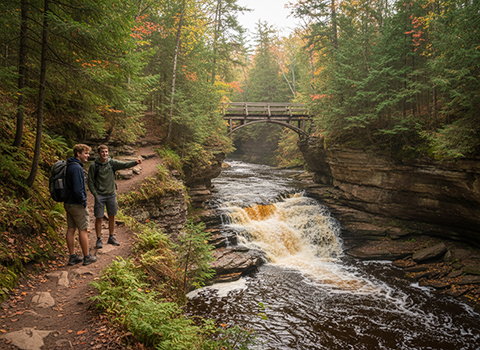
Hiking the Copper Falls State Park – Doughboys Trail offers a rich blend of Northwoods forest scenery, river views, and historical significance. The Doughboys Trail winds through towering hardwoods and pines, following the Bad River as it cuts through ancient lava flows and sandstone. From the very beginning, the trail feels immersive and serene, with the sound of moving water and rustling leaves setting a calm, steady rhythm for the hike.
 Doughboys Trail

The trail is moderately challenging, featuring rolling terrain, stone steps, and occasional elevation changes as it moves along riverbanks and climbs above scenic overlooks. One of the highlights is access to Copper Falls and Brownstone Falls, where powerful cascades tumble through narrow rock channels shaped by volcanic activity more than a billion years ago. Well-maintained paths and footbridges make the hike approachable while still feeling rugged enough to satisfy hikers who enjoy varied terrain and close-up views of waterfalls.

Beyond its natural beauty, the Doughboys Trail carries historical meaning, named in honor of World War I soldiers who trained in the region. Interpretive signs along the route provide insight into both the park’s geology and its human history, adding depth to the experience. Whether visited during peak autumn color, a cool spring thaw, or a quiet summer morning, hiking the Doughboys Trail delivers a memorable journey that combines scenic waterfalls, forest solitude, and a strong sense of place unique to northern Wisconsin.

Peninsula State Park – Eagle Trail

Hiking the Peninsula State Park – Eagle Trail is one of the most dramatic and rewarding trail experiences in Wisconsin. The route hugs the rugged shoreline of Green Bay, climbing and dipping along the edge of the Niagara Escarpment. From the trail’s cliff-top viewpoints, hikers are treated to sweeping vistas of blue water, rocky coves, and distant islands, making the Eagle Trail a standout for scenery and natural drama.
Peninsula State Park Eagle Trail

The trail itself is short but challenging, with steep ascents, descents, exposed roots, and uneven limestone rock underfoot. Narrow passages and abrupt elevation changes demand attention, especially near cliff edges, but these features also give the hike its adventurous character. As the path winds through cedar and hardwood forest, glimpses of water appear unexpectedly between trees, and the sense of elevation above the shoreline adds excitement throughout the hike.

Beyond the physical challenge, the Eagle Trail offers a strong sense of wildness and solitude, particularly in the early morning or shoulder seasons. Birdwatchers may spot raptors riding thermals along the cliffs, while the ever-changing light over Green Bay keeps the views fresh and compelling. Though less than a mile long, hiking the Eagle Trail delivers a powerful experience—combining rugged terrain, sweeping views, and the unmistakable feeling of being high above the water in one of Door County’s most iconic settings.

Governor Dodge State Park – Stephens Falls Trail

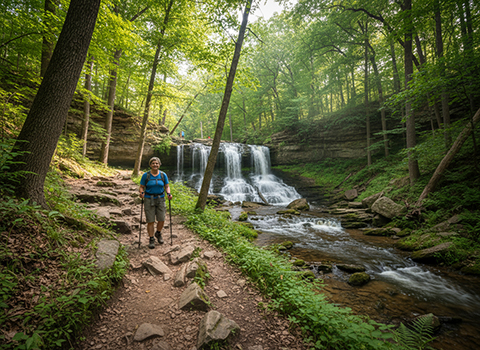
Hiking the Governor Dodge State Park – Stephens Falls Trail offers a peaceful and scenic walk through one of southern Wisconsin’s most picturesque park settings. The trail leads hikers through a wooded ravine shaped by centuries of flowing water, with gentle terrain that makes it approachable for a wide range of visitors. As you descend into the valley, the forest canopy closes in, creating a cool, shaded environment that feels calm and secluded compared to the park’s open ridges and prairies.
Dodge State Park Stephens Falls Trail

The highlight of the trail is Stephens Falls itself, a graceful cascade that spills over layered limestone and sandstone into a shallow pool below. While not large, the waterfall is especially attractive after rainfall or during spring snowmelt, when water volume brings the falls to life. The trail surface is generally well maintained, though rocky and damp sections near the falls require careful footing. Ferns, mosses, and shade-loving plants line the ravine, adding texture and color to the hike throughout the growing season.

Hiking the Stephens Falls Trail is as much about atmosphere as destination. The short length encourages a slow pace, allowing hikers to take in birdsong, moving water, and the subtle details of the forest. Many visitors pair this hike with nearby trails leading to bluffs, prairie overlooks, or Cox Hollow Lake, creating a varied day of exploration. On its own or as part of a longer outing, the Stephens Falls Trail provides a quiet, refreshing experience that highlights the softer, more intimate beauty of Governor Dodge State Park.

Blue Mound State Park – Flintrock Trail

Hiking the Blue Mound State Park – Flintrock Trail offers a rewarding introduction to the high points of southern Wisconsin’s Driftless Area. The trail winds along and across the upper slopes of the park’s prominent mound, gradually gaining elevation through oak savanna and mixed hardwood forest. As you climb, the landscape opens up, revealing expansive views of rolling farmland and distant ridgelines that emphasize just how high Blue Mound rises above the surrounding countryside.
Blue Mound State Park Flintrock Trail

The Flintrock Trail is moderately challenging, with steady elevation changes, rocky footing, and occasional steep sections that reflect the area’s exposed bedrock. The trail surface varies from packed dirt to stone, and the rocky outcrops along the route give the trail its name while adding visual interest and a sense of ruggedness. In spring and summer, wildflowers line portions of the path, while autumn transforms the hike into a colorful panorama of reds, oranges, and golds across the hills below.

What makes hiking the Flintrock Trail especially memorable is the sense of openness and perspective it provides. Breezes are common at higher elevations, and the wide views make this trail a favorite for photographers and hikers seeking a quiet but visually striking experience. Often combined with nearby loops or extended walks to the park’s observation towers, the Flintrock Trail delivers a satisfying blend of elevation, scenery, and Driftless Area character that showcases Blue Mound State Park at its best.

Apostle Islands National Lakeshore – Meyers Beach Sea Cave Trail

Hiking the Apostle Islands National Lakeshore – Meyers Beach Sea Cave Trail offers one of the most visually striking shoreline walks in the Midwest. The trail follows the rugged coast of Lake Superior, where towering sandstone cliffs rise directly from the water and wave action has carved arches, alcoves, and caverns into the rock. From the outset, hikers are treated to sweeping lake views, dramatic cliff faces, and the constant sound of waves breaking against stone, creating a powerful sense of scale and movement.
Meyers Beach Sea Cave

The trail itself is relatively gentle, making it accessible to a wide range of hikers, but the scenery is anything but ordinary. Forested sections alternate with open shoreline viewpoints, and multiple spur paths lead down to rocky beaches where the sea caves can be viewed up close. The formations change character with light, weather, and season—calm summer days reveal clear water and warm-toned cliffs, while windy conditions highlight the raw energy of Lake Superior. In winter, when conditions are safe, the trail becomes a gateway to the famous frozen sea caves, offering a rare and unforgettable hiking experience along ice-lined walls.

Hiking the Meyers Beach Sea Cave Trail is as much about atmosphere as it is about distance. The vastness of the lake, combined with the sculpted rock and quiet forest, creates a sense of wilderness that feels remote and timeless. Whether you walk a short section or explore the full length of the trail, the experience leaves a lasting impression—one defined by natural artistry, ever-changing conditions, and the unique beauty of the Apostle Islands’ mainland shoreline.

Newport State Park – Europe Bay Trail

Hiking the Newport State Park – Europe Bay Trail offers a quiet, immersive walk through one of Wisconsin’s most undeveloped and tranquil state parks. The trail winds through dense forest and along the rugged shoreline of Lake Michigan, where waves lap against rocky beaches and limestone ledges. Unlike many popular Door County destinations, Newport State Park feels remote and untouched, giving hikers a strong sense of solitude and connection to nature.
Europe Bay Trail

The Europe Bay Trail is moderately challenging, with rolling terrain, exposed roots, and rocky sections that require steady footing. As the trail approaches the shoreline, trees open to reveal sweeping lake views, dramatic drop-offs, and secluded coves where water clarity and changing light create constantly shifting scenery. The shoreline segments are especially striking, offering an up-close look at the raw power of Lake Michigan during windy conditions and calm, reflective beauty on quiet days.

What truly sets hiking the Europe Bay Trail apart is its peaceful atmosphere and sense of wilderness. With no roads, concessions, or campgrounds nearby, the trail feels far removed from modern distractions. Wildlife sightings are common, and the park’s designation as a Dark Sky Park adds another layer of appeal for those who linger into evening. Whether visited for a long day hike or as part of a backpacking trip, the Europe Bay Trail delivers a deeply restorative experience defined by silence, shoreline beauty, and Door County’s wild side.

Timm’s Hill Trail (Timm’s Hill County Park)

Hiking the Timm’s Hill Trail offers a unique opportunity to stand atop the highest natural point in Wisconsin. Located within Timm’s Hill County Park, the trail winds gently through mixed hardwood and pine forest, creating a peaceful Northwoods atmosphere from the start. The gradual climb makes the hike approachable for most visitors, while still delivering the quiet satisfaction of ascending to a true geographic high point.
Timm’s Hill Trail

The trail itself is well maintained and relatively short, with a smooth dirt and gravel surface that allows hikers to focus on the surrounding scenery rather than technical footing. As you move upward, the forest occasionally opens to filtered views through the trees, hinting at the elevation gained. The highlight comes near the summit, where an observation tower rises above the treetops, providing unobstructed panoramic views of rolling forest, lakes, and distant hills stretching across northern Wisconsin.

Hiking the Timm’s Hill Trail is less about rugged challenge and more about reflection and perspective. The summit area encourages visitors to linger, take photos, and enjoy the sense of standing above the landscape in all directions. Whether you are collecting state high points, enjoying a relaxed family hike, or pairing the trail with nearby forest roads and paths, the Timm’s Hill Trail delivers a calm, rewarding experience that celebrates Wisconsin’s natural high ground and quiet beauty.