The Hiking Man Hikes Pennsylvania

The Urban Trail Hiker
Hiking in Pennsylvania offers a rich blend of forested mountains, scenic ridges, and historic landscapes, making it a prime destination for outdoor enthusiasts. The state is home to over 120 state parks and a significant stretch of the Appalachian Trail, which winds through the Appalachian Mountains in the east, offering stunning vistas from spots like Bake Oven Knob and Hawk Mountain. In central Pennsylvania, Pine Creek Gorge—often called the “Grand Canyon of Pennsylvania”—features dramatic overlooks and peaceful wooded trails. The Laurel Highlands and Allegheny National Forest provide even more opportunities for backcountry exploration, waterfalls, and serene nature walks. With its year-round beauty and well-maintained trail systems, Pennsylvania delivers hiking experiences that range from leisurely strolls to challenging mountain treks.

Glen Onoko Falls Trail (Lehigh Gorge State Park)

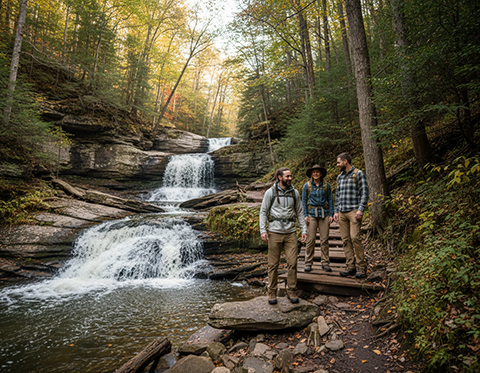
Hiking around the famous Glen Onoko area in Lehigh Gorge State Park has long been considered one of the most dramatic waterfall experiences in Pennsylvania. The original Glen Onoko Falls Trail climbed steeply beside a series of cascading waterfalls through a narrow rocky gorge near the town of Jim Thorpe. Hikers were rewarded with rushing water, moss-covered cliffs, and sweeping overlooks above the Lehigh River Gorge. The trail gained a reputation for combining rugged mountain terrain with the beauty of multiple waterfalls packed into a relatively short distance, making it one of the most photographed hiking destinations in the Pocono region. The surrounding park adds even more scenery, with dense forests, railroad history, and views along the Lehigh River creating a classic northeastern mountain atmosphere.
Glen Onoko Falls Trail

The hike itself became famous for being both beautiful and extremely challenging. The trail climbed sharply over wet rocks, exposed ledges, and eroded sections beside the waterfalls, requiring careful footing and steady balance. Many hikers loved the adventurous nature of the route because it felt far more rugged than a typical state park trail. During spring snowmelt or after heavy rain, the waterfalls became especially powerful, filling the gorge with mist and roaring water. Autumn was also a favorite season because colorful foliage surrounded the cliffs and cascades. Despite its popularity, the difficult terrain and slippery conditions led to numerous injuries and rescue operations over the years, and the trail developed a reputation as one of Pennsylvania’s most dangerous waterfall hikes.

Today, the original Glen Onoko Falls Trail remains officially closed due to safety concerns and deteriorating conditions. The Pennsylvania Game Commission closed the route in 2019 after repeated accidents and fatalities, and visitors are warned not to enter the restricted sections. However, hikers can still enjoy the surrounding area through legal alternative routes such as the Lehigh Gorge Overlook Trail, which provides elevated views of the gorge, forests, and portions of the waterfall system from safer vantage points. State officials have discussed future improvements and possible reopening plans under expanded management by Pennsylvania’s Department of Conservation and Natural Resources, but for now the falls trail itself remains closed. Even with the closure, the Glen Onoko area continues to attract outdoor enthusiasts who come to experience the dramatic scenery and rugged beauty of the Lehigh Gorge region.

Ricketts Glen – Falls Trail Loop

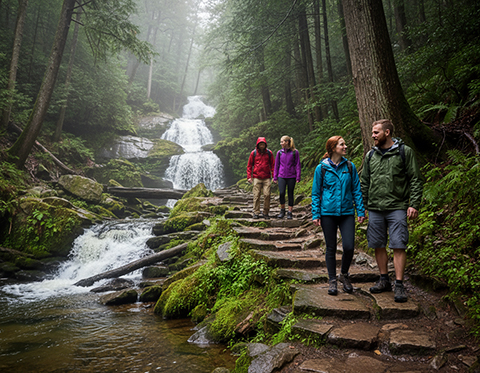
The Ricketts Glen Falls Trail Loop in Ricketts Glen State Park is widely considered one of the finest waterfall hikes in the eastern United States. The trail winds through a deep old-growth forest filled with moss-covered rocks, towering hemlocks, and a remarkable series of waterfalls cascading through narrow glens. Hikers following the full loop can experience more than twenty named waterfalls, including the impressive 94-foot Ganoga Falls, the tallest in the park. The scenery constantly changes as the trail follows Kitchen Creek through steep ravines and rocky stairways, creating a hike that feels both adventurous and peaceful at the same time.
 Ricketts Glen Falls Trail

The trail itself is known for being physically demanding but extremely rewarding. The full Falls Trail Loop is generally around 7.2 miles long and includes many stone steps, slick surfaces, and steep climbs that require careful footing and sturdy hiking boots. Hikers often hear rushing water long before each waterfall appears, adding anticipation as they move deeper into the glens. In spring and after heavy rain, the waterfalls become especially dramatic, while autumn transforms the forest into a vivid display of red, orange, and gold leaves surrounding the cascades. Smaller waterfalls, quiet pools, and fern-lined cliffs appear around nearly every bend, making the trail feel like a continuous series of scenic discoveries.

One of the reasons hikers return to the Falls Trail Loop again and again is the unique combination of wilderness beauty and nonstop scenery. Unlike many waterfall hikes where visitors walk long distances for a single destination, Ricketts Glen delivers waterfall after waterfall throughout nearly the entire route. The glens have a cool, shaded atmosphere even during summer, and the sound of flowing water creates a calming backdrop for the entire hike. Although the terrain can be strenuous, many hikers describe the experience as unforgettable because every section of the trail offers another dramatic cascade, rocky gorge, or forest overlook. The hike captures the rugged natural beauty of Pennsylvania’s mountain forests and remains one of the state’s most celebrated outdoor adventures.

The Pinnacle and Pulpit Rock Loop (Appalachian Trail)

Hiking the Pinnacle and Pulpit Rock Loop along the Appalachian Trail in eastern Pennsylvania is one of the most rewarding ridge hikes in the state. Located near Hamburg on the Blue Mountain ridge, the trail combines rocky Appalachian terrain with sweeping overlooks that stretch across forests, farmland, and distant valleys. The route typically forms an 8.5-to-9-mile loop with roughly 1,200 feet of elevation gain, making it a moderately strenuous day hike that attracts both experienced hikers and casual outdoor enthusiasts looking for dramatic scenery. The two main highlights, Pulpit Rock and The Pinnacle, are famous for offering some of the best panoramic views anywhere along Pennsylvania’s section of the Appalachian Trail.
Pulpit Rock Loop Appalachian Trail

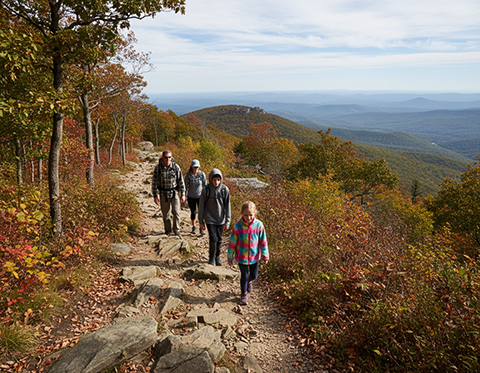
The hike begins with a steady climb through hardwood forest before reaching the rocky ridgeline of the Appalachian Trail. Pennsylvania’s stretch of the AT is often nicknamed “Rocksylvania,” and hikers quickly understand why as the trail becomes filled with uneven stone paths, boulder fields, and occasional rock scrambles. Pulpit Rock is usually the first major overlook encountered, with massive cliffside ledges providing views over the surrounding valleys and reservoirs below. From there, the trail continues along the ridge toward The Pinnacle, where even wider vistas open across Berks County and the rolling Appalachian landscape. During autumn, the overlook becomes especially spectacular as colorful foliage blankets the mountainsides in red, orange, and gold.

One reason hikers love the Pinnacle and Pulpit Rock Loop is the balance between challenge and scenery. The Appalachian Trail portion of the route feels rugged and adventurous, while the return sections often follow gentler forest roads and quieter trails that allow hikers to relax after the rocky ridge traverse. Wildlife sightings are common, and the mountain forests create a peaceful atmosphere despite the trail’s popularity. Spring wildflowers, cool mountain breezes, and long-distance views make the hike memorable in nearly every season. Many hikers consider this loop one of the signature hiking experiences in Pennsylvania because it captures the rugged character, scenic overlooks, and natural beauty that make the Appalachian Mountains so iconic.

Hawk Mountain Sanctuary Trails

Hiking the trails at Hawk Mountain Sanctuary offers one of the most unique outdoor experiences in Pennsylvania, combining scenic mountain hiking with world-famous birdwatching opportunities. Located along the Kittatinny Ridge in the Appalachian Mountains, the sanctuary is internationally known as a premier location for observing migrating hawks, eagles, falcons, and other raptors during the fall migration season. The trail system winds through forests, rocky ridges, and mountain overlooks that provide sweeping views of the surrounding valleys and farmland. Whether visitors choose a short walk to the South Lookout or a longer trek deeper into the sanctuary, the combination of mountain scenery and soaring birds creates a memorable hiking experience unlike almost anywhere else in the eastern United States.
 Hawk Mountain Sanctuary Trail

The sanctuary offers trails ranging from easy family-friendly paths to more strenuous hikes across rugged Appalachian terrain. The South Lookout Trail is one of the most popular options because it provides a relatively short hike to a dramatic overlook where visitors can sit on sun-warmed rocks and watch hawks riding thermal air currents overhead. More advanced hikers often continue toward North Lookout, River of Rocks, or the Golden Eagle Trail, which feature steeper climbs, boulder fields, and quieter sections of forest. Along the way, hikers pass through hardwood woods filled with oak, maple, and pine trees while hearing the sounds of wind moving across the ridge. During autumn, the colorful foliage and crisp mountain air make the sanctuary especially beautiful and attract visitors from across the country.

One of the most enjoyable aspects of hiking at Hawk Mountain is the peaceful atmosphere combined with constant opportunities to observe wildlife. Even hikers who are not dedicated birdwatchers often become fascinated while seeing hawks glide silently overhead or spotting distant bald eagles soaring above the ridgeline. Benches and lookout areas encourage visitors to pause and take in both the scenery and the migration activity. The sanctuary also has a strong conservation history, having become the world’s first refuge for birds of prey in the 1930s. Today, hiking the trails not only provides outdoor adventure and beautiful mountain views, but also connects visitors to an important conservation success story that helped protect raptors throughout North America.

Mount Minsi via Appalachian Trail (Delaware Water Gap)

Hiking Mount Minsi via the Appalachian Trail is one of the classic hiking experiences in the Delaware Water Gap region. Rising above the town of Delaware Water Gap, Pennsylvania, Mount Minsi offers hikers a rewarding climb with sweeping views of the Delaware River, surrounding mountains, and the dramatic gap carved through the Appalachian ridges. The trail is part of the famous Appalachian National Scenic Trail and combines rocky mountain terrain with beautiful forest scenery. Although the hike is moderately strenuous due to the steady elevation gain and rocky footing, it is considered one of the most scenic day hikes in eastern Pennsylvania.
 Mount Minsi Appalachian Trail

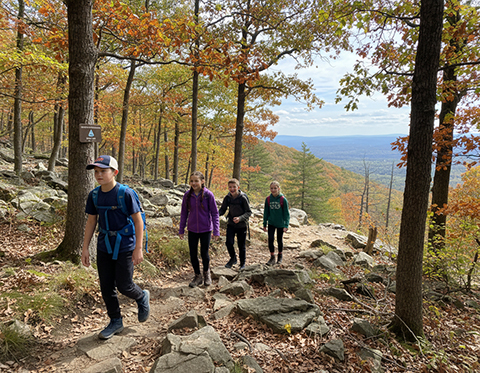
The hike usually begins near the town at the Appalachian Trail trailhead and quickly climbs through hardwood forest filled with oak, maple, and pine trees. The ascent includes rocky switchbacks, stone stair sections, and uneven stretches typical of Pennsylvania’s rugged Appalachian Trail terrain. Along the way, hikers encounter several overlooks that provide increasingly impressive views of the Delaware Water Gap and neighboring Mount Tammany across the river in New Jersey. One of the most famous spots is Lookout Rock, where hikers can rest on broad stone ledges while watching the river wind through the mountains below. During autumn, the mountain becomes especially spectacular as colorful foliage spreads across the valleys and ridges in every direction.

One reason hikers enjoy Mount Minsi so much is the combination of challenge, scenery, and connection to the larger Appalachian Trail experience. Thru-hikers traveling the entire Appalachian Trail often pass through this section, adding a sense of adventure and hiking tradition to the route. Wildlife sightings are common, and the peaceful forest atmosphere contrasts beautifully with the dramatic cliffside viewpoints along the ridge. In spring and summer, the forest feels lush and shaded, while winter can provide crisp clear views extending for miles across the Pocono Mountains and the Delaware River valley. The hike captures the rugged beauty of the Appalachian Mountains and remains one of the signature outdoor destinations in the Delaware Water Gap area.

Loyalsock Trail (Loyalsock State Forest)

Hiking the Loyalsock Trail in Loyalsock State Forest offers one of the most rugged and scenic backpacking experiences in Pennsylvania. Stretching for roughly 59 miles across the Endless Mountains region of north-central Pennsylvania, the trail winds through remote forests, deep stream valleys, rocky ridges, and waterfalls. The route is known for its peaceful wilderness atmosphere, where hikers can spend long stretches surrounded only by hardwood forests, flowing creeks, and the sounds of wildlife. Many outdoor enthusiasts consider the Loyalsock Trail one of the premier long-distance hiking trails in the Mid-Atlantic because it combines solitude, varied terrain, and beautiful mountain scenery without the crowds often found on more famous trails.
 Loyalsock Trail

The trail features constantly changing landscapes that keep hikers engaged throughout the journey. Some sections follow quiet creeks shaded by hemlocks and rhododendron tunnels, while others climb steep ridges with sweeping views across Pennsylvania’s forested mountains. Hikers encounter waterfalls, natural rock formations, footbridges, and occasional open vistas that reveal the rolling ridgelines of the Appalachian Plateau. One of the most famous highlights is the Haystacks area, where Loyalsock Creek cuts through unusual rock formations and creates scenic cascades and pools. The trail can also be physically demanding, with steep ascents, muddy sections, and numerous stream crossings adding to the sense of adventure and backcountry immersion.

One of the reasons hikers are drawn to the Loyalsock Trail is its strong feeling of remoteness and wilderness. Backpackers often spend multiple days on the trail, camping in primitive sites beneath towering trees and experiencing dark night skies far from city lights. During autumn, the forest becomes especially spectacular as vibrant red, orange, and yellow foliage covers the mountainsides. Spring brings rushing streams and blooming wildflowers, while summer offers cool shaded sections along the creeks. Wildlife such as deer, black bears, wild turkeys, and songbirds are commonly seen throughout the forest. Hiking the Loyalsock Trail provides not only a challenging outdoor adventure, but also a chance to experience some of Pennsylvania’s most untouched and scenic mountain wilderness.

Jacobsburg Environmental Center – Henry’s Woods Loop

Hiking the Henry’s Woods Loop at Jacobsburg Environmental Education Center offers a peaceful and scenic outdoor experience in eastern Pennsylvania. Located within a large protected natural area near Bushkill Creek, the trail winds through mature hardwood forest, quiet meadows, and gently rolling terrain that showcases the beauty of the region’s woodlands. The loop is popular with hikers, birdwatchers, photographers, and families because it combines easy-to-moderate hiking with a calm natural setting that feels surprisingly remote despite being close to nearby towns. The trail is especially enjoyable for hikers looking for a relaxing walk through nature rather than a strenuous mountain climb.
 Jacobsburg Environmental Center Henry’s Woods Loop

The Henry’s Woods Loop passes through shaded forests filled with oak, maple, beech, and hemlock trees, creating cool and comfortable hiking conditions during much of the year. Seasonal changes bring a variety of scenery to the trail, from spring wildflowers and fresh green foliage to vibrant autumn colors covering the forest floor. Wildlife sightings are common, including deer, songbirds, squirrels, and occasional sightings of foxes or hawks overhead. The path itself is generally well maintained, with gentle elevation changes and soft forest trails that make it accessible to a wide range of hikers. Along the route, hikers can enjoy the sounds of rustling leaves, flowing creeks, and birdsong that contribute to the peaceful atmosphere of the environmental center.

One of the most appealing aspects of hiking at Jacobsburg is the combination of recreation, conservation, and local history. The environmental center is dedicated to preserving both natural habitats and the historical heritage of the area, including its connection to the Henry family and early American industrial history. Interpretive signs and educational programs help visitors learn about local wildlife, forests, and ecosystems while exploring the trails. The Henry’s Woods Loop offers a slower-paced hiking experience where visitors can focus on the details of the forest environment rather than simply reaching a destination. For many hikers, the trail provides an enjoyable opportunity to reconnect with nature while experiencing one of eastern Pennsylvania’s best-preserved natural areas.

Dingmans Falls and Silverthread Falls Trail (Delaware Water Gap NRA)

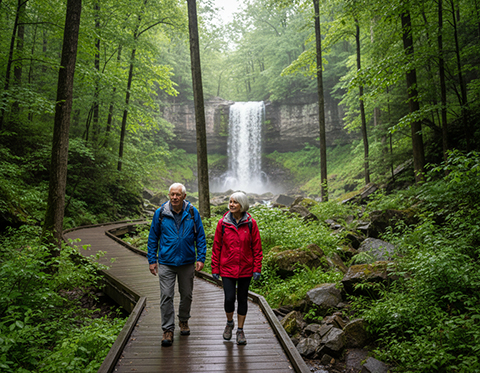
Hiking the Dingmans Falls Trail is one of the most accessible and scenic waterfall experiences in the Delaware Water Gap National Recreation Area. The trail leads visitors through a lush forest gorge to Dingmans Falls, one of the tallest waterfalls in Pennsylvania at approximately 130 feet high. Unlike many rugged mountain hikes in the region, the Dingmans Falls Trail follows a relatively easy boardwalk path that allows visitors of many ages and fitness levels to enjoy the beauty of the waterfall and surrounding woodland environment. The combination of rushing water, towering trees, and cool mountain air creates a peaceful setting that feels refreshing during every season.
 Dingmans Falls Trail

The hike begins with a wooden boardwalk that winds through wetlands, hemlock groves, and alongside Dingmans Creek. Along the route, hikers often hear the sound of cascading water before the falls themselves come into view. A smaller waterfall, Silverthread Falls, appears early in the hike and drops gracefully down a narrow rock face beside the trail. Continuing farther along the path, visitors reach viewing platforms and stairways that provide dramatic views of Dingmans Falls as it crashes down multiple rocky ledges into the gorge below. The mist from the falls and the shaded forest environment create a cool and almost rainforest-like atmosphere, especially during spring and summer when the vegetation is thick and vibrant.

One reason the Dingmans Falls Trail remains so popular is that it offers spectacular scenery without requiring a difficult climb. Families, photographers, birdwatchers, and casual hikers can all enjoy the trail comfortably while still experiencing the rugged natural beauty of the Delaware Water Gap region. In autumn, colorful foliage surrounds the waterfalls, creating one of the most picturesque scenes in northeastern Pennsylvania. The area also provides opportunities to connect with nearby trails and explore more remote sections of the national recreation area for those wanting additional adventure. Hiking Dingmans Falls gives visitors a chance to experience waterfalls, forest scenery, and the peaceful sounds of flowing water in one of the most beautiful protected landscapes along the Appalachian Mountains.

Bear Meadows Loop Trail (Rothrock State Forest)

Hiking the Bear Meadows Loop Trail in Rothrock State Forest offers a peaceful journey through one of central Pennsylvania’s most ecologically unique landscapes. The trail winds through the Bear Meadows Natural Area, a rare mountain bog and wetland ecosystem surrounded by forests and rolling ridges near State College. Unlike rugged mountain hikes focused on dramatic overlooks, the Bear Meadows Loop emphasizes quiet natural beauty, wildlife habitat, and diverse plant life. Hikers are treated to a mix of forest trails, open meadows, wetlands, and small streams that create a calm and immersive wilderness experience. The area feels remote and untouched, making it especially appealing for those who enjoy nature observation and tranquil woodland hiking.
 Bear Meadows Loop Trail

The loop passes through dense hardwood forests filled with oak, maple, birch, and hemlock trees before opening into scenic meadow and wetland sections. Seasonal changes dramatically affect the scenery along the trail. Spring brings blooming wildflowers and active birdlife, while summer fills the meadows with lush greenery and buzzing insects. In autumn, the surrounding forests become covered in brilliant shades of red, orange, and yellow, creating beautiful reflections in the wetland pools and marshy areas. Wildlife is abundant throughout the natural area, and hikers may encounter deer, wild turkeys, songbirds, amphibians, and a wide variety of native plants. The trail’s gentle terrain and peaceful atmosphere make it ideal for hikers looking to slow down and appreciate the details of the forest environment.

One of the most fascinating aspects of hiking the Bear Meadows Loop is the ecological significance of the landscape itself. Bear Meadows is considered a rare relict bog ecosystem left behind after the last Ice Age, and the area supports plant and animal species not commonly found elsewhere in Pennsylvania. The quiet wetlands, mossy ground, and cool mountain climate create an environment that feels distinctly different from many other forest trails in the region. Hiking here provides not only outdoor recreation, but also an opportunity to experience a protected natural habitat that has remained relatively unchanged for thousands of years. For hikers who appreciate solitude, birdwatching, photography, and peaceful scenery, the Bear Meadows Loop offers one of the most serene hiking experiences in Rothrock State Forest.

Pole Steeple Trail (Pine Grove Furnace State Park)

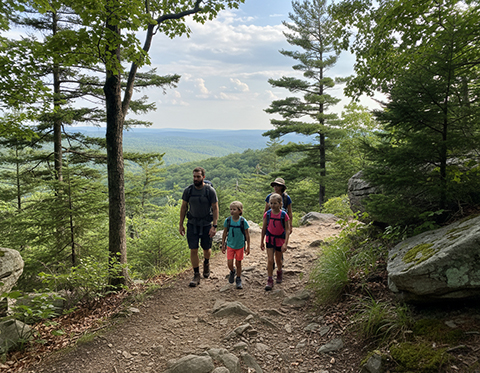
Hiking the Pole Steeple Trail in Pine Grove Furnace State Park is one of the most popular short hikes along Pennsylvania’s section of the Appalachian Mountains. The trail leads to the rocky summit of Pole Steeple, a dramatic overlook rising above Laurel Lake and the surrounding forests of the Cumberland Valley. Although the hike is relatively short at roughly 1.5 to 2 miles round trip depending on the route taken, the climb is steep enough to provide a satisfying workout while still being accessible to many casual hikers. The reward at the summit is a panoramic view that stretches across forests, farmland, and ridgelines, making it one of the signature scenic destinations in south-central Pennsylvania.
Pole Steeple Trail

The trail begins in shaded woodland and quickly ascends along rocky paths and switchbacks through hardwood forest. As hikers climb higher, occasional openings in the trees provide glimpses of the valley below before the trail finally reaches the broad rocky summit area. Pole Steeple itself is an exposed rock outcrop where visitors can sit on warm stone ledges and enjoy sweeping views over Pine Grove Furnace State Park. The overlook is especially beautiful during autumn when the surrounding forests turn brilliant shades of red, orange, and gold. Sunrise and sunset hikes are particularly popular because the changing light across the valley creates dramatic scenery and excellent photography opportunities.

One reason hikers enjoy the Pole Steeple Trail so much is the balance between effort and reward. The relatively short distance allows visitors to experience mountain hiking and scenic overlooks without committing to a full-day trek. The area also has a rich hiking culture due to its connection with the nearby Appalachian National Scenic Trail, which passes through Pine Grove Furnace State Park and is famous as the location of the Appalachian Trail Museum and the traditional halfway point for many thru-hikers. Wildlife, peaceful forest scenery, and the dramatic summit views make Pole Steeple a favorite destination for both local hikers and travelers exploring Pennsylvania’s Appalachian region.