The Hiking Man Hikes Hawaii

The Urban Trail Hiker
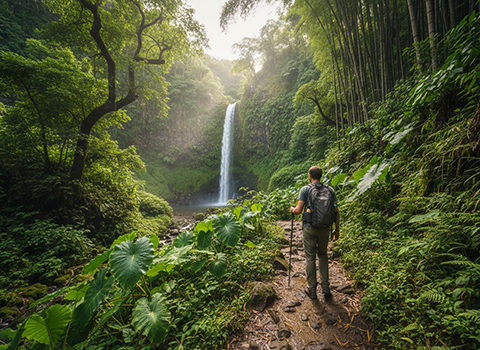
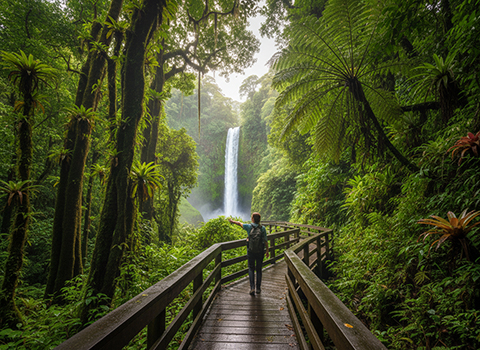
Hiking in Hawaii is a breathtaking journey through lush rainforests, volcanic landscapes, and dramatic coastal cliffs. Each island offers its own unique trails—on Kauai, the Kalalau Trail hugs the rugged Nā Pali Coast, while on Maui, the Pipiwai Trail leads through bamboo groves to the towering Waimoku Falls. Hawaiʻi (Big Island) features otherworldly treks across hardened lava fields in Hawaiʻi Volcanoes National Park, and Oahu boasts scenic ridge hikes like Diamond Head and Koko Crater, offering sweeping ocean views. Along the way, hikers can encounter waterfalls, native flora, ancient Hawaiian cultural sites, and vibrant birdlife. With its diverse ecosystems and stunning natural beauty, Hawaii provides unforgettable hiking adventures for every skill level.

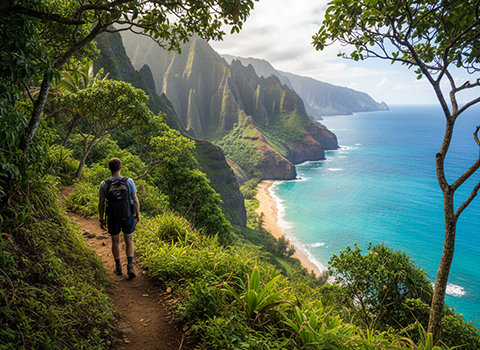
Kalalau Trail (Kauai)

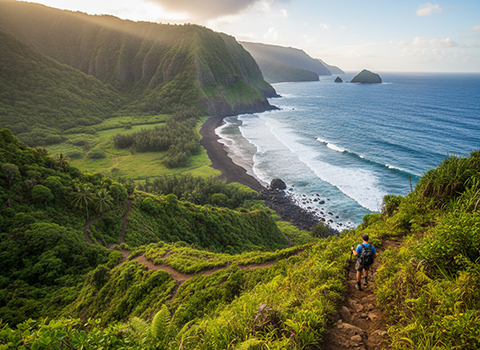
Hiking the Kalalau Trail on Kauai is widely considered one of the most spectacular—and demanding—coastal hikes in the United States. The trail traces the rugged Nā Pali Coast for roughly 11 miles one way, beginning at Keʻe Beach and winding through dramatic sea cliffs, narrow ledges, and deep green valleys carved by centuries of rainfall. From the very first steps, hikers are treated to sweeping views of the Pacific Ocean crashing against towering basalt cliffs, with waterfalls spilling down the mountainsides after rain. The trail’s beauty is immediate and constant, making even short day hikes feel like an immersive wilderness experience.
Kalalau Trail

The first two miles to Hanakāpīʻai Beach are popular and accessible, but conditions can change quickly beyond that point. After crossing Hanakāpīʻai Stream, the trail becomes more remote and challenging, with steep ascents, exposed sections, and muddy footing—especially after rain. Highlights along the way include views into Hanakoa Valley and the sense of isolation that deepens with each mile. Weather, flash flooding, and ocean conditions demand respect, and hikers must be prepared for sudden changes. This is not a casual stroll; it is a hike that rewards careful planning, physical endurance, and situational awareness.

For those continuing all the way to Kalalau Valley, the experience becomes truly unforgettable. The final miles descend into a lush, amphitheater-like valley backed by towering cliffs and fringed by a remote beach, accessible only by foot or boat. Campers with permits can spend days exploring the valley, swimming beneath waterfalls, and watching the sun set over the Pacific in near total solitude. The Kalalau Trail is more than just a hike—it is a journey through one of Hawaii’s most pristine landscapes, offering a profound sense of accomplishment and connection to Kauai’s wild, untamed spirit.

Diamond Head Summit Trail (Oahu)

Hiking the Diamond Head Summit Trail on Oahu offers a classic Hawaiian experience that blends history, geology, and sweeping coastal views. Located just east of Waikīkī, this short but iconic trail climbs the interior of an extinct volcanic crater known as Lēʻahi. The hike is only about 1.6 miles round trip, but it steadily gains elevation as it winds upward through switchbacks and rocky terrain. Along the way, hikers gain a strong sense of place, with interpretive signs explaining the crater’s volcanic origins and its role in coastal defense during the early 20th century.
Diamond Head Summit Trail

As the trail ascends, it becomes more engaging, passing through narrow tunnels, steep stairways, and military-era bunkers built when Diamond Head served as a strategic lookout. These features add character and a touch of adventure, making the hike feel more substantial than its short distance suggests. The path is well maintained, but the climb can be strenuous in the heat, especially during midday, so early morning hikes are popular. Despite the effort, the frequent glimpses of turquoise water and the Honolulu skyline provide ample motivation to keep climbing.

Reaching the summit rewards hikers with one of the most famous panoramic views in Hawaii. From the top, you can see Waikīkī’s beaches, downtown Honolulu, and the vast Pacific Ocean stretching to the horizon, often with surfers visible below. On clear days, the contrast between the city, the ocean, and the crater itself is striking. The Diamond Head Summit Trail is a perfect introduction to hiking on Oahu—short, scenic, and memorable—offering a sense of accomplishment and a deep appreciation for the island’s natural and cultural landscape.

Pipiwai Trail (Maui)

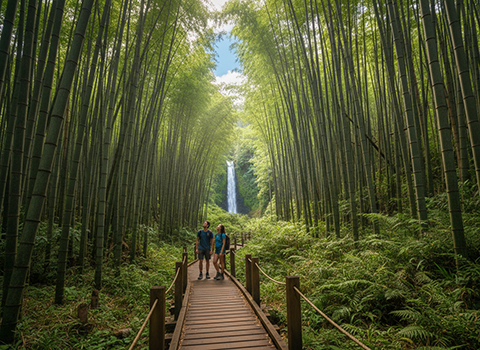
Hiking the Pipiwai Trail on Maui is a lush, immersive journey through one of the island’s most enchanting rainforest landscapes. Located in the Kīpahulu District of Haleakalā National Park, this well-maintained trail stretches about 4 miles round trip and steadily climbs through dense tropical vegetation. From the outset, hikers are surrounded by towering trees, vibrant ferns, and the constant sound of flowing water, creating a cool, shaded environment that feels far removed from Maui’s beaches and resort areas.
Pipiwai Trail in Maui

One of the most memorable sections of the hike is the bamboo forest, where tall bamboo stalks arch overhead and sway in the wind, producing a hollow, rhythmic creaking that adds to the trail’s atmosphere. Elevated boardwalks guide hikers safely through this damp area, helping protect both visitors and the fragile ecosystem. Along the way, scenic overlooks provide views of Makahiku Falls cascading down a sheer cliff, offering excellent photo opportunities and natural rest stops before the final push to the trail’s highlight.

The trail culminates at the base of Waimoku Falls, a dramatic 400-foot waterfall plunging into a rocky pool framed by moss-covered cliffs. While swimming is prohibited due to falling rock hazards, the sheer scale and power of the waterfall make it a breathtaking destination. The Pipiwai Trail offers a rewarding blend of accessibility and adventure, making it one of Maui’s most popular hikes for good reason. It showcases the island’s rainforest beauty in a way that feels both serene and awe-inspiring, leaving hikers with a lasting impression of Maui’s wild interior.

Koko Crater Railway Trail (Oahu)

Hiking the Koko Crater Railway Trail on Oahu is a short but intensely challenging climb that rewards determination with sweeping island views. Often called the “Koko Head Stairs,” this trail follows the steep remnants of a World War II–era railway once used to transport military supplies to the summit. The route ascends roughly 1,000 feet in less than a mile, climbing more than 1,000 railroad ties that form a relentless staircase straight up the crater’s ridge. From the very beginning, the incline is unapologetically steep, making this hike a true test of leg strength and stamina.
 Koko Crater Railway Trail

As hikers climb higher, the sense of exposure increases, especially along sections where the stairs are uneven or where gaps in the old railway structure require careful footing. Trade winds often provide welcome cooling, but they can also add to the challenge near the top. Frequent pauses are common and encouraged, as each stop offers increasingly expansive views of Hanauma Bay, the southeastern coastline of Oahu, and the deep blue Pacific Ocean. Despite the trail’s brevity, the physical demand and elevation gain make it feel far longer than the mileage suggests.

Reaching the summit delivers a powerful sense of accomplishment along with panoramic vistas in nearly every direction. From the top of Koko Crater, hikers can see Diamond Head in the distance, inland mountain ranges, and waves breaking far below along the shoreline. The descent can be just as taxing as the climb, requiring careful steps to avoid slipping on the steep stairs. The Koko Crater Railway Trail is not for everyone, but for those seeking a tough, efficient workout paired with unforgettable views, it stands out as one of Oahu’s most iconic and rewarding hikes.

Mauna Kea Summit Trail (Big Island)

Hiking the Mauna Kea Summit Trail on Hawaiʻi’s Big Island is a rare experience that feels more like walking on another planet than a typical island hike. Rising to over 13,800 feet above sea level, Mauna Kea is the tallest mountain on Earth when measured from its base, and the summit trail traverses a stark, high-altitude landscape of volcanic cinder cones, lava rock, and sweeping skies. Unlike the lush rainforest hikes common in Hawaii, this trail unfolds in an alpine desert environment where vegetation is sparse and the horizon seems endless.
Mauna Kea Summit Trail

The hike itself is physically demanding, not because of technical difficulty, but due to the extreme elevation and thin air. Even short distances can feel strenuous, and hikers often move slowly to avoid altitude-related issues. The terrain consists of loose cinder and rocky footing, requiring steady steps and careful balance. Weather conditions can change rapidly, with strong winds, cold temperatures, and intense sun exposure all possible on the same day. Proper acclimatization, warm layers, sun protection, and ample water are essential for anyone attempting the summit trail.

Reaching the top is an unforgettable achievement, offering sweeping views above the clouds and across the entire Big Island on clear days. From the summit area, hikers can look down on neighboring volcanoes like Mauna Loa and, at times, even glimpse Maui in the distance. The presence of world-class observatories adds a sense of scale and human curiosity to the otherwise vast natural landscape. Hiking the Mauna Kea Summit Trail is not just a physical journey but a humbling encounter with geology, altitude, and the raw power of Hawaii’s volcanic origins, leaving hikers with a deep respect for this sacred and awe-inspiring mountain.

Waihee Ridge Trail (Maui)

Hiking the Waihee Ridge Trail on Maui is a rewarding climb that delivers some of the island’s most dramatic mountain scenery. Located in the lush West Maui Mountains, this out-and-back trail stretches just under 5 miles round trip and steadily ascends along a narrow ridge above Waiheʻe Valley. From the trailhead, hikers begin climbing through dense forest, where native trees, ferns, and moss-covered branches create a cool, shaded atmosphere. As elevation is gained, glimpses of the coastline and valley below begin to appear, hinting at the expansive views ahead.
Waihee Ridge Trail

The trail continues upward through a series of switchbacks, becoming steeper and more exposed as it follows the spine of the ridge. Cloud cover often drifts through this area, adding a sense of mystery and constantly changing the scenery. When the clouds lift, the views are breathtaking, revealing deep green valleys, sharp ridgelines, and cascading waterfalls cutting through the mountainsides. Mud can be an issue after rain, so good traction is important, but the well-defined path keeps the hike manageable for those in decent physical condition.

At the upper lookout, hikers are rewarded with sweeping panoramic views of the West Maui Mountains that feel both vast and intimate. The sense of elevation and exposure is striking, with steep drop-offs on either side of the ridge and the ocean visible in the distance on clear days. The Waihee Ridge Trail offers a perfect balance of challenge and accessibility, making it one of Maui’s standout hikes. It showcases the island’s mountainous interior at its most dramatic, leaving hikers with a lasting appreciation for Maui’s wild, sculpted landscapes.

Manoa Falls Trail (Oahu)

Hiking the Manoa Falls Trail on Oahu is a gentle rainforest walk that showcases the island’s lush, tropical side. Located in Mānoa Valley just minutes from downtown Honolulu, this popular trail is about 1.6 miles round trip and follows a well-defined path through dense vegetation. Towering banyan trees, bamboo groves, and a variety of native and introduced plants create a cool, shaded environment that feels worlds away from the nearby city. The constant sound of birds and flowing water adds to the peaceful atmosphere as hikers make their way deeper into the valley.
Manoa Falls Trail

The trail gradually climbs along a dirt and gravel path that can become muddy and slick, especially after rain. While the elevation gain is modest, sturdy footwear is recommended to handle roots and wet sections. Interpretive signs along the route provide insight into the area’s natural and cultural history, enriching the experience beyond the scenery alone. Because of its accessibility and beauty, the trail is popular with families and visitors of all ages, making it a lively yet still immersive hike.

At the end of the trail, Manoa Falls emerges dramatically from a rocky cliff, plunging nearly 150 feet into a shallow pool below. Although swimming is prohibited due to the risk of falling rocks and flash flooding, the waterfall is an impressive and rewarding destination. Mist rising from the base cools the air, and the surrounding greenery frames the falls beautifully. The Manoa Falls Trail offers a perfect introduction to hiking on Oahu, combining ease, natural beauty, and a classic Hawaiian waterfall experience in a short and memorable outing.

Pololu Valley Trail (Big Island)

Hiking the Pololu Valley Trail on Hawaiʻi’s Big Island is a short but striking descent into one of the island’s most scenic and culturally significant valleys. Located at the end of Highway 270 in North Kohala, the trail begins at a dramatic lookout with sweeping views of steep sea cliffs, lush valley walls, and the black-sand beach far below. The hike is less than a mile round trip, but it drops quickly in elevation, immediately immersing hikers in the raw beauty of the island’s northern coastline.
Pololu Valley Trail

The trail itself is steep and often muddy, especially after rain, with exposed roots and uneven footing that require careful steps. As you descend, the sound of wind and surf grows louder, and the vegetation thickens, giving the hike a wild, untamed feel despite its short length. Reaching the valley floor reveals a wide, open area where a freshwater stream meets the ocean, framed by ironwood trees and towering green cliffs. The black-sand beach is visually stunning, though ocean conditions are often rough, making swimming unsafe most days.

For those with experience and proper preparation, informal footpaths extend beyond the main trail into neighboring valleys, offering deeper exploration and solitude. Even without venturing farther, Pololu Valley leaves a lasting impression through its powerful sense of place—where natural beauty, Hawaiian history, and isolation intersect. The climb back up is a workout, but the reward is a renewed appreciation for the dramatic landscapes that define the Big Island. The Pololu Valley Trail is brief yet unforgettable, offering a glimpse into Hawaiʻi’s rugged, elemental heart.

Sliding Sands Trail (Keonehe’ehe’e) (Maui) terrain

Hiking the Sliding Sands Trail (Keonehe‘ehe‘e) on Maui is a dramatic journey across one of Hawaii’s most otherworldly terrains. Beginning near the summit of Haleakalā, this trail descends into the vast volcanic crater, immediately immersing hikers in a stark landscape of colorful cinder cones, ash fields, and exposed lava rock. The ground underfoot is composed primarily of loose volcanic cinders and compacted ash, giving the trail its name—steps often slide slightly with each stride, especially on the descent. The absence of trees and the immense scale of the crater create a powerful sense of openness and isolation.
Sliding Sands Trail

As the trail drops deeper into the crater, the terrain continues to shift subtly in color and texture, ranging from rust-red and charcoal-black to pale gray and ochre. The surface alternates between soft, sandy cinder sections and firmer, rocky stretches that demand careful footing. Vegetation is sparse, limited to hardy alpine plants adapted to thin soils, strong winds, and intense sun. With little shade and frequent temperature swings, hikers are fully exposed to the elements, making sun protection, wind layers, and ample water essential for safely navigating this high-elevation environment.

Farther into the crater, the immensity of Haleakalā becomes even more apparent as surrounding cinder cones rise sharply from the crater floor. The quiet is profound, broken only by wind and the crunch of volcanic gravel underfoot. While the descent can feel deceptively easy, the loose terrain makes the return climb significantly more demanding, turning the hike into a serious physical challenge. The Sliding Sands Trail offers a rare opportunity to walk through a living volcanic landscape, where the terrain itself tells the story of Maui’s fiery geological past and leaves hikers with a deep respect for the power and scale of the island’s interior.

Akaka Falls Loop Trail (Big Island)

Hiking the Akaka Falls Loop Trail on Hawaiʻi’s Big Island is a short, scenic walk that highlights the island’s lush rainforest and dramatic waterfalls. Located along the Hāmākua Coast, this paved loop trail is less than half a mile long but offers an immersive experience through dense tropical vegetation. Towering bamboo, wild orchids, and massive ferns line the path, creating a shaded, humid environment that feels vibrant and alive. The well-maintained walkway makes the trail accessible to a wide range of visitors while still delivering a strong sense of natural beauty.
Akaka Falls Loop Trail

As the loop descends, viewpoints open up to reveal Kahuna Falls, a wide cascade that plunges hundreds of feet into a deep gorge. Continuing along the path, hikers soon reach the highlight of the park—ʻAkaka Falls itself. The waterfall drops an impressive 442 feet straight down a sheer cliff, making it one of the tallest and most iconic waterfalls in Hawaiʻi. The sound of rushing water echoes through the gorge, and mist often drifts across the overlook, adding to the dramatic atmosphere.

Although brief, the Akaka Falls Loop Trail offers a rewarding experience that feels far more substantial than its length suggests. The gentle elevation changes and paved surface make it ideal for families or as a stop between longer adventures on the island. Combined with the rich plant life and powerful waterfalls, the trail provides an excellent introduction to the Big Island’s windward rainforest ecosystems. Hiking the Akaka Falls Loop Trail is a reminder that even short walks in Hawaiʻi can deliver unforgettable scenery and a deep connection to the land.