The Hiking Man Hikes Connecticut

The Urban Trail Hiker
Hiking in Connecticut offers a peaceful and scenic experience through rolling hills, dense woodlands, and charming New England landscapes. Despite its small size, the state features a rich network of trails, including parts of the Appalachian Trail in the northwest corner, where hikers can enjoy views from Bear Mountain, the state’s highest peak. The Blue-Blazed Trail System spans over 800 miles across Connecticut, guiding hikers through serene forests, rocky ridges, and alongside rivers and waterfalls. Popular destinations like Sleeping Giant State Park, Devil’s Hopyard, and Mohawk Mountain provide accessible yet rewarding hikes for all skill levels. With its blend of natural beauty and historical charm, Connecticut offers a tranquil and varied hiking experience year-round.


Bear Mountain (Appalachian Trail)

Hiking Bear Mountain on the Appalachian Trail offers one of the most iconic and accessible trail experiences in the northeastern United States. Located within Bear Mountain State Park, this section of the trail is known for its rocky terrain, historic stone steps, and sweeping views of the Hudson River Valley. Despite its relatively short distance compared to other Appalachian Trail segments, the ascent is steep and physically demanding, making it a rewarding challenge for day hikers looking for a classic AT experience without committing to a multi-day trek.
Bear Mountain trail

As you climb, the trail passes through hardwood forests and exposed rock slabs that showcase the rugged character of the Hudson Highlands. Stone staircases—some built more than a century ago—help hikers navigate steep sections, while occasional overlooks provide excellent places to pause and take in views of the Hudson River, West Point, and surrounding mountains. Near the summit, the landscape opens up, and hikers are rewarded with panoramic scenery that changes dramatically with the seasons, from lush green summers to vibrant autumn foliage and snow-dusted winter vistas.

Reaching the summit of Bear Mountain feels especially satisfying because of the contrast between the strenuous climb and the accessibility of the destination. The summit area near Perkins Memorial Tower offers space to rest, refuel, and reflect on the climb, while the presence of other trails allows hikers to customize loop routes or explore further into the park. Whether you are a seasoned Appalachian Trail hiker or someone tackling a classic Northeast hike for the first time, Bear Mountain delivers a concentrated dose of challenge, history, and scenic payoff that makes it a standout section of the trail.

Sleeping Giant Tower Trail

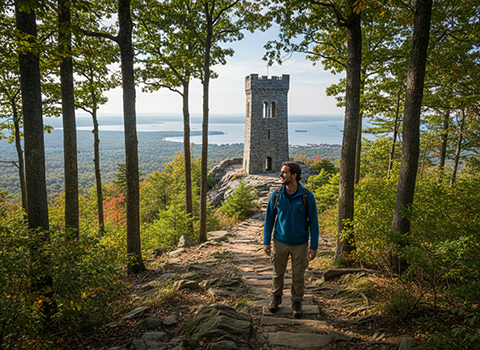
Hiking the Sleeping Giant Tower Trail in Sleeping Giant State Park is one of Connecticut’s most rewarding short hikes, combining steady elevation gain with excellent views and a historic summit feature. The trail climbs the spine of the “giant,” a ridgeline whose profile resembles a sleeping figure when viewed from a distance. Though not extremely long, the trail is moderately strenuous due to rocky footing and a consistent uphill grade, making it a satisfying workout for hikers seeking a quick but engaging climb.
Sleeping Giant Tower Trail

As you ascend, the Tower Trail weaves through mixed hardwood forest before transitioning onto exposed traprock ridges typical of southern New England. These rocky sections offer glimpses of the surrounding countryside and add a rugged feel uncommon for the region’s relatively low elevations. The terrain encourages careful footing, especially after rain or during winter conditions, but the frequent open views and breezes make the climb feel invigorating rather than tedious.

The highlight of the hike is the stone observation tower at the summit, where hikers are rewarded with sweeping views of the Quinnipiac River Valley, New Haven, and Long Island Sound on clear days. The summit area is an excellent place to rest, enjoy a snack, and take in the sense of height created by the exposed ridgeline. Whether tackled as a standalone hike or combined with other trails in the park, the Sleeping Giant Tower Trail offers a classic Connecticut hiking experience with a surprising sense of elevation, scenery, and history packed into a compact route.

Heublein Tower Trail (Talcott Mountain State Park)

Hiking the Heublein Tower Trail in Talcott Mountain State Park is one of Connecticut’s most popular and scenic ridge hikes, offering a rewarding climb with broad views over central Connecticut. The trail follows a steady but manageable ascent along Talcott Mountain’s traprock ridgeline, making it accessible to many hikers while still providing a sense of accomplishment. With a well-maintained path and a mix of shaded forest and exposed rock, it is an ideal hike for families, casual hikers, and those looking for a classic New England outing.
Heublein Tower Trail

As the trail climbs, hikers pass through oak and maple forest before emerging onto rocky sections where the terrain opens dramatically. These exposed areas provide frequent scenic overlooks, with views stretching toward the Farmington Valley and, on clear days, as far as the Berkshires. The traprock cliffs give the hike a rugged feel despite the modest elevation, and breezes along the ridge help keep the climb comfortable even in warmer months. Autumn is especially popular, as the trail offers excellent vantage points for viewing fall foliage across the valley below.

The destination of the hike is the historic Heublein Tower, a striking stone structure that once served as a summer home and now functions as an observation tower. From the summit, hikers are treated to sweeping 360-degree views that make the climb well worth the effort. The area around the tower is perfect for resting, enjoying a snack, or simply taking in the expansive scenery. Whether hiked for exercise, history, or views, the Heublein Tower Trail delivers a memorable and scenic experience that highlights the natural beauty of Talcott Mountain State Park.

Devil's Hopyard State Park (Chapman Falls Trail)

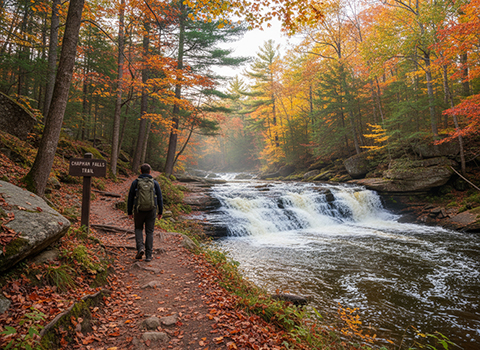
Hiking the Chapman Falls Trail in Devil's Hopyard State Park offers one of the most picturesque waterfall experiences in Connecticut. The trail is relatively short and accessible, making it popular with families and casual hikers, yet it delivers impressive scenery almost immediately. Chapman Falls cascades down stepped bedrock alongside the Eightmile River, creating a dramatic and photogenic landscape that feels far more rugged than the park’s modest elevation might suggest.
 Chapman Falls Trail

As you follow the trail, you’ll walk along the riverbank through a mix of hardwood forest and rocky outcrops. Multiple viewpoints allow hikers to observe the falls from different angles, highlighting how the water fans out and tumbles over smooth stone ledges. The sound of rushing water is constant, especially after rain or during spring snowmelt, adding to the immersive feel of the hike. While the trail is generally easy, wet rocks near the falls can be slippery, encouraging slower movement and careful footing.

Beyond the main waterfall, the trail can be extended by connecting to other paths within the park, offering a quieter woodland experience away from the busiest viewpoints. Picnic areas and open spaces nearby make the hike easy to pair with a relaxed afternoon in the park. Whether you’re stopping briefly to admire Chapman Falls or exploring deeper into Devil’s Hopyard State Park, the Chapman Falls Trail provides a rewarding blend of natural beauty, gentle hiking, and classic New England scenery.

West Rock Ridge (Regicides Trail)

Hiking the Regicides Trail at West Rock Ridge State Park offers a striking combination of natural beauty, history, and elevated views over the New Haven area. The trail follows the dramatic basalt ridgeline of West Rock, climbing steadily through forest before reaching exposed cliffs that rise sharply above the surrounding landscape. While not overly long, the hike includes rocky footing and moderate elevation gain, making it engaging without being overwhelming for most hikers.
Regicides Trail

As you progress along the Regicides Trail, the terrain alternates between shaded woodland and open traprock ledges typical of Connecticut’s ridgeline parks. Several overlooks provide expansive views of New Haven Harbor, Long Island Sound, and the city below, especially impressive on clear days. One of the trail’s most notable features is Judges Cave, a historic site tied to colonial-era events, which adds a sense of depth and storytelling to the hike beyond its scenic appeal.

The ridgeline setting creates a feeling of height and openness uncommon in southern New England, with breezes and wide vistas rewarding the climb. The trail also connects to other routes within the park, allowing hikers to extend their outing or form loop hikes of varying difficulty. Whether you’re drawn by the panoramic views, the geological character of the cliffs, or the historical significance woven into the landscape, the Regicides Trail at West Rock Ridge delivers a memorable hike that blends scenery, effort, and local history into a single experience.

Rattlesnake Mountain (Metacomet Trail)

Hiking Rattlesnake Mountain on the Metacomet Trail offers a short but rewarding climb along one of central Connecticut’s most scenic traprock ridgelines. Located near Farmington, this section of trail is known for its steady ascent and dramatic elevation gain relative to its length. The hike is moderately strenuous, with rocky footing and uphill stretches that provide a solid workout while remaining accessible to most day hikers.
Metacomet Trail

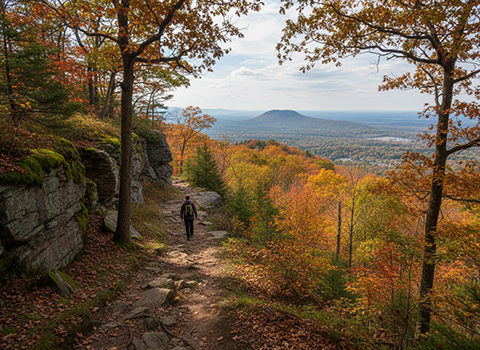
As the trail climbs Rattlesnake Mountain, hikers move through hardwood forest before emerging onto exposed basalt ledges that define the Metacomet Ridge. These open sections deliver sweeping views of the Farmington Valley, surrounding towns, and distant hills, creating a strong sense of height despite the mountain’s modest elevation. The rugged traprock terrain gives the hike a wild feel, and breezes along the ridge help keep the climb comfortable, especially during warmer months. Fall is a particularly popular time to hike here, as the overlooks provide excellent vantage points for viewing autumn foliage.

The summit and ridgeline areas are ideal places to pause, enjoy the scenery, and appreciate the geological character that makes the Metacomet Trail unique. This hike can be enjoyed as a quick out-and-back or combined with nearby trail segments for a longer ridge walk. Whether you’re hiking for exercise, views, or a taste of Connecticut’s distinctive ridgeline landscapes, Rattlesnake Mountain delivers a concentrated and memorable experience that highlights the best features of the Metacomet Trail.

Mount Higby Trail – Near Middlefield

Hiking the Mount Higby Trail near Middlefield offers a classic Connecticut ridgeline experience with dramatic scenery packed into a relatively short hike. Part of the Metacomet Trail, Mount Higby is known for its steep ascent, rocky footing, and impressive elevation gain over a short distance. While the trail is not long, it is moderately to sometimes steeply strenuous, making it a favorite for hikers who enjoy a challenging climb with a big payoff.
Mount Higby Trail

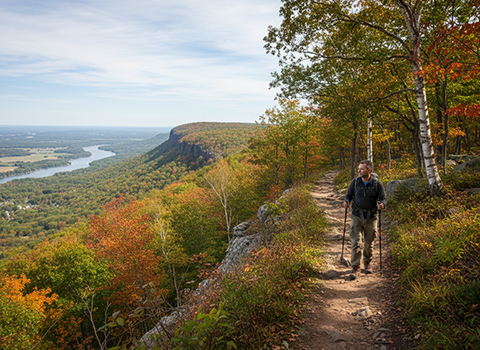
As you ascend, the trail passes through mixed hardwood forest before breaking out onto exposed traprock cliffs that define the Metacomet Ridge. These basalt ledges create striking overlooks with expansive views of Lake Lure, nearby hills, and the broader central Connecticut landscape. The open ridgeline gives the hike a rugged, almost alpine feel despite the modest elevation, and breezes along the cliffs add to the sense of height and openness. Careful footing is important, especially near cliff edges and after wet or icy conditions.

The summit area and ridgeline provide excellent places to stop, rest, and take in the scenery, making the climb feel especially rewarding. Mount Higby is often less crowded than some nearby ridgeline hikes, offering a quieter and more immersive experience in nature. Whether tackled as a short out-and-back hike or combined with other Metacomet Trail segments, the Mount Higby Trail delivers a memorable blend of physical challenge, dramatic geology, and sweeping views that make it a standout hike near Middlefield.

Peoples State Forest Trails (Jessie Gerard Trail)

Hiking the Jessie Gerard Trail in People's State Forest offers a scenic and moderately challenging experience in one of northwestern Connecticut’s most peaceful forest settings. The trail climbs steadily away from the Farmington River, making it a good choice for hikers who enjoy gradual elevation gain paired with natural beauty. While not overly long, the trail’s uphill sections provide a satisfying workout, especially for those looking to combine exercise with quiet woodland exploration.
Jessie Gerard Trail

As the Jessie Gerard Trail ascends, hikers move through mature hardwood forest interspersed with rocky outcrops and occasional clearings. The changing elevation creates subtle shifts in scenery, and seasonal changes are especially noticeable here, from spring wildflowers to vibrant fall foliage. Portions of the trail offer glimpses back toward the river valley below, adding visual interest and a sense of progress as you climb. The footing is generally manageable, though roots and rocks can make sections feel rugged after rain.

At higher points along the trail, hikers are rewarded with a more open feel and a sense of remoteness uncommon in many Connecticut parks. The Jessie Gerard Trail also connects with other routes in People’s State Forest, allowing for longer loop hikes or extended explorations of the area. Whether you’re seeking a quiet hike, a moderate physical challenge, or a deeper immersion into Connecticut’s forested landscapes, the Jessie Gerard Trail delivers a rewarding and uncrowded outdoor experience.

Bluff Point Coastal Reserve Trail

Hiking the Bluff Point Coastal Reserve Trail in Bluff Point State Park and Coastal Reserve offers a refreshing blend of shoreline scenery, forest paths, and open coastal landscapes. Located in Groton, this trail system is relatively flat and easy, making it accessible to hikers of all skill levels. The main loop and connecting trails wind through undeveloped coastal terrain, creating a peaceful hiking experience that feels far removed from nearby roads and development.
Bluff Point Coastal Reserve Trail

As you follow the trail, the scenery alternates between wooded sections, grassy meadows, rocky shoreline, and sandy beach areas along Long Island Sound. Open coastal views are a constant highlight, with expansive water vistas, sea breezes, and frequent opportunities to spot shorebirds and other wildlife. The terrain is generally smooth and well maintained, making the hike suitable for families and those looking for a relaxed walk rather than a strenuous climb. In warmer months, the combination of forest shade and ocean air keeps the hike comfortable and refreshing.

One of the most appealing aspects of the Bluff Point Coastal Reserve Trail is the sense of space and openness it provides. The undeveloped coastline allows hikers to linger at viewpoints, explore tidal areas, or enjoy a quiet moment by the water. The trail also connects easily to nearby beach access points, making it simple to combine hiking with shoreline exploration or a picnic. Whether you’re seeking scenic coastal views, an easygoing hike, or a peaceful nature escape, Bluff Point delivers a uniquely serene and scenic experience along Connecticut’s shoreline.

Air Line State Park Trail

Hiking the Air Line State Park Trail offers a relaxed and scenic experience along one of Connecticut’s most well-known rail-trails. Built on a former railroad corridor, the trail stretches across multiple towns and provides a mostly flat, wide pathway that is ideal for hikers of all abilities. Its gentle grade makes it especially appealing for long-distance walks, family outings, and anyone looking for an easy hike without steep climbs or technical terrain.
Air Line State Park Trail

As you move along the trail, you’ll pass through a variety of landscapes, including woodlands, wetlands, open fields, and small river crossings. Old railroad bridges and remnants of rail infrastructure add historical character to the hike, while long straightaways create a peaceful, rhythmic walking experience. Wildlife sightings are common, particularly birds and small mammals, and the quiet setting makes it easy to feel immersed in nature despite the trail’s accessibility and popularity.

One of the strengths of the Air Line State Park Trail is its versatility. Hikers can choose short out-and-back sections or plan longer point-to-point hikes covering many miles without repeating terrain. The trail is also popular year-round, offering shaded summer walks, vibrant fall foliage, and serene winter scenery when lightly snow-covered. Whether you’re seeking a leisurely nature walk, a long endurance hike, or a calm outdoor escape, the Air Line State Park Trail provides a scenic and approachable way to explore Connecticut’s countryside.