The Hiking Man Hikes Arizona

The Urban Trail Hiker
Arizona boasts a plethora of stunning hiking trails that cater to outdoor enthusiasts of all levels. Whether you're seeking stunning desert vistas, tranquil canyon landscapes, or challenging mountain climbs, Arizona's diverse terrain provides endless opportunities for outdoor adventure and exploration.

Havasu Falls Trail

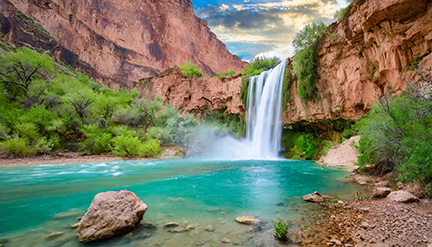
The Havasu Falls Trail in Arizona is an iconic and breathtaking hike that leads adventurers through the rugged beauty of the Grand Canyon to the stunning turquoise waters of Havasu Falls. Situated within the Havasupai Indian Reservation, this trail offers a unique opportunity to experience the remote and awe-inspiring landscapes of the Grand Canyon. The trail begins at Hualapai Hilltop and descends approximately 8 miles into the canyon, leading hikers through desert terrain, towering sandstone cliffs, and lush vegetation.
Havasu Falls Trail

One of the highlights of the Havasu Falls Trail is reaching the Havasupai Village, where hikers can rest and replenish their supplies before continuing on to the majestic waterfalls. As hikers descend further into the canyon, they are treated to stunning views of the turquoise waters of Havasu Creek, which flows through a series of cascading waterfalls and emerald pools. The trail culminates at Havasu Falls, a 100-foot waterfall that plunges into a vibrant turquoise pool, creating a scene of unparalleled beauty and tranquility.

Hiking the Havasu Falls Trail is a bucket-list adventure that offers hikers the chance to immerse themselves in the natural beauty and rich cultural heritage of the Grand Canyon. Whether camping overnight in the canyon or embarking on a day hike to the falls, visitors are sure to be captivated by the sheer majesty and serenity of Havasu Falls. With its stunning landscapes, crystal-clear waters, and vibrant colors, the Havasu Falls Trail is a must-visit destination for outdoor enthusiasts seeking an unforgettable hiking experience in Arizona's Grand Canyon.

Bright Angel Trail

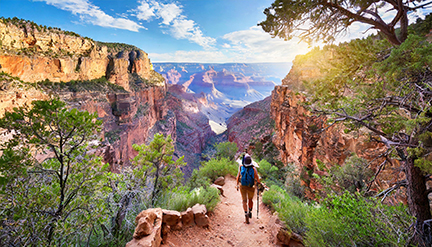
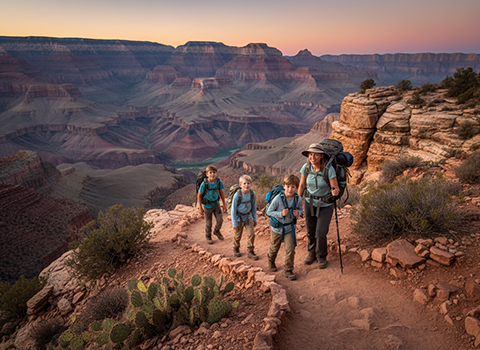
The Bright Angel Trail, located in Grand Canyon National Park, is one of the most iconic and popular hiking trails in Arizona. Starting near the Grand Canyon Village on the South Rim, this historic trail offers hikers breathtaking views of the canyon's majestic landscapes as they descend approximately 9.5 miles to the Colorado River. Along the way, hikers traverse a series of switchbacks, winding through colorful rock formations, diverse ecosystems, and towering cliffs that reveal the geological history of the canyon.
Bright Angel Trail

One of the highlights of the Bright Angel Trail is reaching Indian Garden, a scenic oasis nestled within the canyon about halfway down the trail. Here, hikers can rest and refuel at the campground or picnic area, surrounded by lush vegetation, trickling streams, and panoramic views of the canyon walls. From Indian Garden, the trail continues its descent to the Colorado River, offering hikers the opportunity to explore the inner depths of the canyon and witness its awe-inspiring beauty up close.

Hiking the Bright Angel Trail is a memorable adventure that provides a glimpse into the natural wonders and rich history of the Grand Canyon. Whether embarking on a day hike to one of the trail's scenic overlooks or backpacking overnight to the river and back, visitors are sure to be captivated by the sheer magnitude and beauty of the canyon's landscapes. With its stunning vistas, challenging terrain, and opportunities for exploration and discovery, the Bright Angel Trail offers an unforgettable hiking experience for outdoor enthusiasts of all skill levels.

Camelback Mountain Summit Trail:

The Camelback Mountain Summit Trail, situated in the heart of Phoenix, Arizona, is a challenging yet immensely popular hiking trail that rewards adventurers with sweeping panoramic views of the city skyline and the surrounding Sonoran Desert landscape. Rising to an elevation of approximately 2,704 feet, Camelback Mountain is an iconic natural landmark that beckons hikers to conquer its rugged slopes. The Summit Trail, accessible from both the Echo Canyon and Cholla Trailheads, offers a thrilling ascent through rocky terrain, steep inclines, and towering saguaro cacti.
Camelback Mountain Summit Trail

As hikers make their way along the Camelback Mountain Summit Trail, they are treated to breathtaking vistas of the sprawling metropolis of Phoenix, framed by the majestic peaks of the McDowell Mountains and the Superstition Mountains in the distance. The trail is known for its challenging switchbacks and rocky scrambles, which require careful navigation and physical exertion. However, the stunning views and sense of accomplishment upon reaching the summit make it a favorite destination for locals and visitors alike.

Reaching the summit of Camelback Mountain is a truly rewarding experience that offers hikers a sense of accomplishment and awe-inspiring views of the surrounding desert landscape. From the rocky outcrops at the top, hikers can admire the vibrant hues of the Arizona sunset casting a warm glow over the valley below, or marvel at the city lights twinkling in the darkness after dusk. Whether embarking on a sunrise hike to catch the first light illuminating the desert landscape or enjoying a sunset trek to witness the fiery colors of the sky, hiking the Camelback Mountain Summit Trail promises an unforgettable adventure and a chance to connect with the natural beauty of the Sonoran Desert.

West Fork Trail

The West Fork Trail, nestled within the picturesque Oak Creek Canyon near Sedona, Arizona, offers hikers a serene and enchanting journey through a lush and verdant canyon landscape. Renowned for its towering sandstone cliffs, crystal-clear streams, and vibrant foliage, this popular trail provides a tranquil escape into the heart of the Red Rock Country. The trailhead, located off Highway 89A, beckons hikers to embark on an unforgettable adventure through one of Arizona's most scenic and pristine wilderness areas.
 West Fork Trail

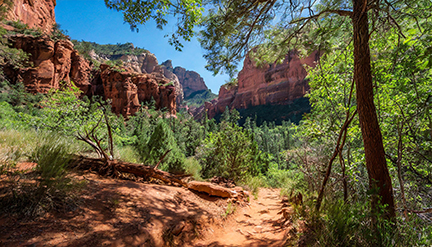
As hikers venture along the West Fork Trail, they are greeted by the soothing sounds of rushing water and the gentle rustle of leaves in the breeze. The trail meanders alongside Oak Creek, crossing back and forth over the creek on a series of rustic footbridges, providing ample opportunities to soak in the natural beauty of the canyon. Towering cliffs rise majestically overhead, adorned with vibrant greenery and colorful wildflowers that flourish in the cool, shaded canyon environment.

One of the highlights of the West Fork Trail is reaching the Call of the Canyon area, where hikers are treated to breathtaking views of towering red rock formations and cascading waterfalls. Here, the trail narrows as it winds through towering sandstone walls, creating a sense of intimacy and wonderment. With its tranquil ambiance, stunning scenery, and opportunities for wildlife viewing and photography, the West Fork Trail offers a memorable outdoor experience that showcases the unparalleled beauty of Arizona's natural landscapes.

The Wave Trail

The Wave Trail, located within the Vermilion Cliffs National Monument near the Arizona-Utah border, is a geological marvel renowned for its surreal sandstone formations and vibrant colors. Accessible only by permit through a lottery system, this bucket-list hike offers adventurers a once-in-a-lifetime opportunity to explore a landscape of swirling rock formations, narrow slot canyons, and breathtaking vistas. The trailhead, located off House Rock Valley Road, serves as the starting point for this otherworldly adventure.
Wave Trail

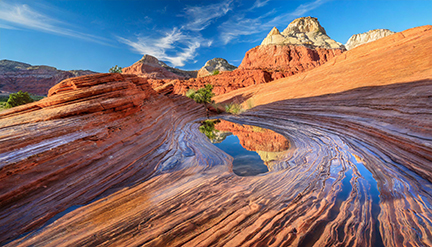
As hikers traverse the Wave Trail, they are transported into a landscape that seems more akin to a painting than reality. The undulating sandstone formations, sculpted by wind and water over millions of years, create a mesmerizing tapestry of colors and textures that captivates the imagination. Each twist and turn of the trail reveals new and awe-inspiring vistas, with towering cliffs, delicate arches, and hidden alcoves waiting to be discovered around every corner.

Reaching the Wave itself is the ultimate reward for hikers on this challenging and unforgettable journey. Tucked away in a remote corner of the desert, the Wave is a masterpiece of nature, with its swirling patterns and vibrant hues creating a sense of wonder and awe. As hikers stand amidst the sculpted sandstone, surrounded by the quiet beauty of the desert wilderness, they can't help but feel a profound connection to the natural world and a deep appreciation for the incredible forces that have shaped the landscape over eons.

Humphreys Peak Trail

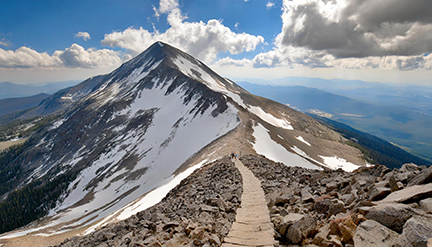
The Humphreys Peak Trail, near Flagstaff, Arizona, offers outdoor enthusiasts an exhilarating and rewarding hiking experience. As the highest point in Arizona at 12,633 feet, reaching the summit of Humphreys Peak promises breathtaking panoramic views of the surrounding San Francisco Peaks, lush alpine meadows, and the vast Arizona landscape stretching into the distance. This challenging but iconic trail begins at the Arizona Snowbowl ski resort, approximately 14 miles north of Flagstaff, and ascends over 3,300 feet in elevation across a 4.8-mile trek to the peak.
Humphreys Peak Trail

Hiking the Humphreys Peak Trail presents hikers with a diverse range of landscapes and ecosystems to traverse. The trail winds through dense pine forests, where towering trees provide shade and shelter, and wildflowers bloom in the summer months. As hikers ascend higher, they emerge from the forest into alpine tundra, where rocky slopes and patches of snow create a stark and dramatic landscape. Along the way, hikers may encounter wildlife such as mule deer, elk, and various bird species, adding to the allure and excitement of the hike.

Reaching the summit of Humphreys Peak is a challenging but immensely gratifying accomplishment. From the peak, hikers are treated to unparalleled views of the surrounding wilderness, with sweeping vistas that extend as far as the eye can see. On clear days, hikers can marvel at the beauty of the Grand Canyon to the north, the Painted Desert to the east, and the distant peaks of Utah and New Mexico. Whether embarking on a day hike or camping overnight in the backcountry, the Humphreys Peak Trail offers outdoor enthusiasts an unforgettable adventure and a chance to connect with the natural beauty and grandeur of northern Arizona.

Peralta Trail to Fremont Saddle

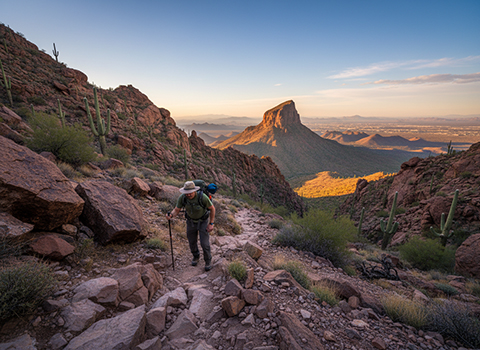
The Peralta Trail to Fremont Saddle is a captivating and challenging hike that winds through the rugged terrain of the Superstition Wilderness in Arizona. Beginning at the Peralta Trailhead near Apache Junction, hikers are immediately immersed in the stark beauty of the desert landscape, surrounded by towering saguaro cacti and jagged rock formations. The trail ascends steadily, with rocky switchbacks and steep inclines providing a formidable but rewarding challenge for hikers.
Peralta Trail to Fremont Saddle

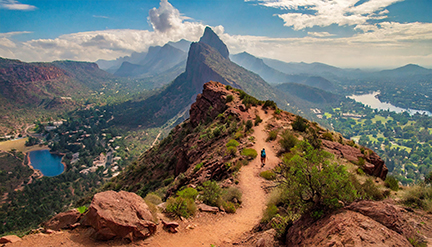
As hikers ascend the Peralta Trail, they are treated to breathtaking views of the surrounding desert vistas, including the iconic silhouette of Weaver's Needle, a prominent rock formation that dominates the horizon. Along the way, the trail meanders through a diverse array of desert flora, from colorful wildflowers to prickly pear cacti, offering glimpses of the unique and resilient ecosystems that thrive in this arid environment. Despite the rugged terrain, the trail is well-marked and maintained, making it accessible to hikers of varying skill levels.

The pinnacle of the Peralta Trail is Fremont Saddle, a rocky outcrop that offers stunning panoramic views of the Superstition Wilderness and beyond. From this vantage point, hikers can marvel at the vast expanse of the desert landscape, with its rugged canyons, towering peaks, and distant mountain ranges stretching as far as the eye can see. Whether embarking on a day hike or camping overnight in the backcountry, the Peralta Trail to Fremont Saddle promises an unforgettable adventure and a chance to connect with the raw beauty and untamed wilderness of the Arizona desert.

South Kaibab Trail

Hiking the South Kaibab Trail is one of the most visually dramatic ways to experience the Grand Canyon. Starting from the South Rim, the trail immediately commits hikers to open, panoramic views with no forest cover to block the scenery. Unlike many canyon trails, South Kaibab follows a ridgeline rather than a side canyon, providing constant vistas of layered rock, deep side gorges, and the winding Colorado River far below. Even short hikes—such as to Ooh Aah Point or Cedar Ridge—deliver a sense of vastness that makes this trail especially popular for first-time visitors.
South Kaibab Trail

The trail is steep and exposed, descending rapidly through a series of tight switchbacks carved into the canyon’s spine. As hikers move lower, the scale of the canyon becomes increasingly apparent, with dramatic drop-offs and sweeping horizons in every direction. Skeleton Point offers a notable turnaround for day hikers, providing a rare view of the Colorado River without committing to a full descent. Because there is no potable water along the trail, hikers must carry sufficient supplies, and the lack of shade makes sun protection and early start times critical—especially during warmer months.

What makes South Kaibab truly memorable is how it emphasizes perspective and light. Sunrise and sunset hikes are particularly striking, as shifting shadows reveal new colors and textures in the canyon walls with every step. While it is often paired with the Bright Angel Trail for a loop hike, South Kaibab alone stands out for its intensity and uninterrupted beauty. It is a trail that demands respect and preparation, but rewards hikers with one of the most immersive and iconic hiking experiences anywhere in Arizona—or the world.

Cathedral Rock Trail

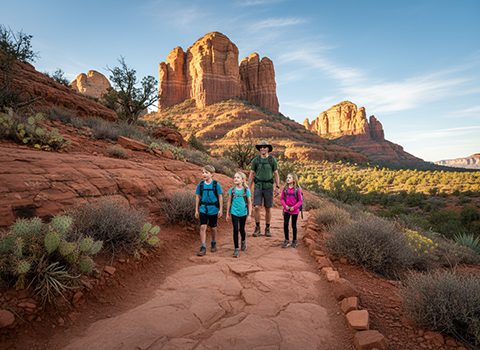
Hiking the Cathedral Rock Trail is one of the most iconic short hikes in northern Arizona, offering dramatic scenery packed into a relatively small distance. The trail begins near Oak Creek and quickly draws hikers upward toward towering red sandstone formations that dominate the skyline. From the very start, expansive views open across Sedona’s red rock country, with Courthouse Butte, Bell Rock, and the surrounding mesas creating a vivid backdrop. Despite its popularity, the trail retains a strong sense of place, blending desert vegetation, slickrock, and sweeping vistas..
Cathedral Rock Trail

As the ascent continues, the trail becomes steeper and more rugged, requiring hands-on scrambling in several sections. These slickrock climbs are clearly worn by use, but they demand careful footing, especially after rain. The physical challenge is part of the trail’s appeal, rewarding hikers with ever-expanding views as they climb higher. Many visitors pause along the way to rest on rock ledges, take photographs, or experience what some believe to be the area’s strong spiritual “vortex” energy, a concept that has become closely associated with Cathedral Rock.

Reaching the saddle near the top feels like stepping onto a natural balcony above Sedona. From this elevated perch, hikers are treated to panoramic views stretching across red rock spires, forested valleys, and distant desert plains. Sunset is a particularly popular time to visit, as the fading light ignites the sandstone in deep reds and oranges. Though short, the Cathedral Rock Trail delivers a powerful combination of beauty, challenge, and atmosphere, making it a must-hike for visitors seeking one of Sedona’s most memorable experiences.

Devil’s Bridge Trail

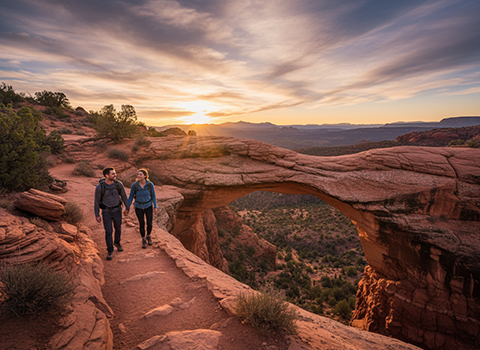
Hiking the Devil’s Bridge Trail is one of Sedona’s most popular and visually striking outdoor experiences. The trail winds through juniper and pinyon pine forest beneath towering red rock cliffs before gradually climbing toward its famous natural sandstone arch. For much of the hike, the path is relatively gentle, making it accessible to a wide range of hikers, while the surrounding scenery steadily builds anticipation. As the trail nears the base of the arch, views of Mescal Mountain and the surrounding red rock formations begin to dominate the landscape.
Devil’s Bridge Trail

The final approach to Devil’s Bridge is where the hike becomes more adventurous. A short but steep slickrock scramble leads hikers up to the top of the arch, requiring the use of hands and careful footing. While the climb is brief, the exposure can feel intimidating, especially for those uncomfortable with heights. Once atop the bridge, hikers are rewarded with sweeping views of the desert and forest below, and the massive arch itself provides a dramatic and unforgettable setting. This section often becomes congested, as visitors take turns stepping out onto the arch for photographs.

Standing on Devil’s Bridge offers a sense of scale and wonder that defines Sedona hiking. The contrast between the smooth sandstone beneath your feet and the open drop-offs on either side makes the moment both exhilarating and humbling. Sunrise and late afternoon are especially beautiful, as changing light intensifies the reds and oranges of the surrounding rock. Though short in distance, the Devil’s Bridge Trail delivers an outsized experience, combining approachable terrain, a touch of scrambling, and one of Arizona’s most iconic natural landmarks.


Flatiron via Siphon Draw

Hiking the Flatiron via Siphon Draw is one of the most demanding and rewarding hikes in central Arizona. Beginning at Lost Dutchman State Park, the trail quickly enters Siphon Draw, a broad, rocky drainage that funnels hikers directly toward the sheer east face of the Superstition Mountains. Early on, the route feels deceptively manageable, but the dramatic cliffs looming overhead make it clear that this is no casual desert walk. As elevation is gained, sweeping views open across the Sonoran Desert, with saguaro-studded foothills stretching far into the distance.
Flatiron via Siphon Draw

As the climb continues, Siphon Draw steepens significantly and the trail becomes less defined, transitioning into a mix of boulder hopping, loose scree, and exposed scrambling. Route-finding becomes an important skill here, as cairns guide hikers through natural breaks in the rock. The terrain is physically punishing, especially in warm weather, and there is no shade or water along the route. Every step upward reveals a greater sense of scale, with vertical volcanic walls rising on both sides and the desert floor dropping away below.

Reaching the Flatiron itself feels like stepping onto the edge of a massive stone aircraft carrier perched above the valley. From the summit, hikers are rewarded with breathtaking views across the Phoenix metro area, the rugged Superstition backcountry, and distant mountain ranges fading into the horizon. The sense of accomplishment is immense, earned through effort, exposure, and perseverance. Flatiron via Siphon Draw is a hike that demands respect, preparation, and good judgment—but for those who reach the top, it delivers one of Arizona’s most unforgettable summit experiences.


Antelope Canyon

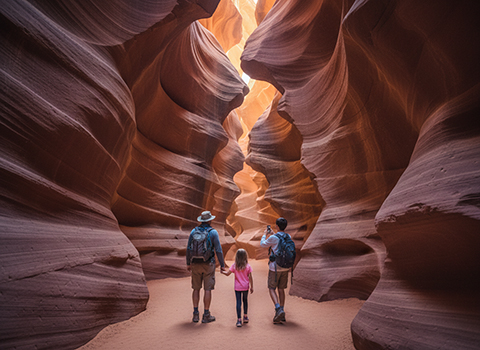
Hiking Antelope Canyon is unlike a traditional trail hike, offering a slow, immersive walk through one of the world’s most famous slot canyons. Located on Navajo Nation land near Page, the canyon is carved into smooth Navajo sandstone by centuries of flash flooding and wind erosion. As visitors move through the narrow passages, the walls twist and undulate in flowing shapes, creating a sense of being inside a natural sculpture. The confined space amplifies every sound and movement, encouraging a quieter, more contemplative pace than most open desert hikes.
Antelope Canyon

The canyon is best known for its extraordinary light and color. In Upper Antelope Canyon, sunlight filters down through narrow openings above, creating dramatic beams that shift throughout the day and illuminate the rock in glowing shades of orange, red, and gold. Lower Antelope Canyon offers a slightly more physical experience, with ladders, stairs, and tighter corridors that require careful footing and flexibility. In both sections, the constantly changing angles of light make every step feel visually new, even over short distances.

Because of the risk of flash floods, Antelope Canyon can only be visited on guided tours, adding an educational element to the experience. Navajo guides share insights into the canyon’s geology, cultural significance, and the forces that continue to shape it. While it may lack the elevation gain and solitude of a backcountry hike, Antelope Canyon delivers an unforgettable journey through light, stone, and shadow. It is a place where the act of walking becomes secondary to simply absorbing one of Arizona’s most surreal and beautiful natural wonders.