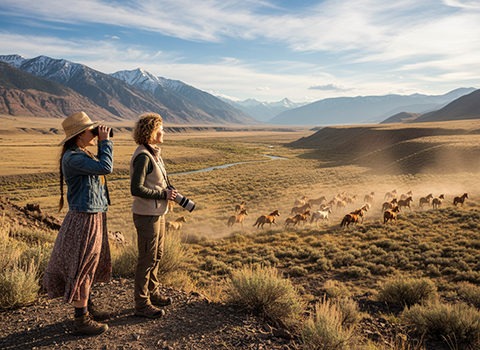
 Idaho offers an exceptional range of animal-viewing opportunities thanks to its mix of mountains, forests, river valleys, and high desert ecosystems. Visitors can spot large mammals such as elk, mule deer, pronghorn, and moose in places like the Sawtooth National Recreation Area or along the Salmon River corridor, where wildlife often comes right down to the water’s edge. The state is also home to thriving populations of black bears and mountain goats, and in more remote areas, you may even encounter gray wolves or wolverines. Early mornings and evenings provide the best chances to see animals moving across open meadows or grazing near forest edges, all set against Idaho’s dramatic scenery.
Birdwatchers will also find Idaho especially rewarding, with everything from bald eagles and osprey fishing in the lakes to sandhill cranes and great blue herons frequenting wetlands like those near Lake Coeur d’Alene or the Snake River Birds of Prey National Conservation Area. The state’s waterways attract river otters and beavers, while quiet forest trails might reveal glimpses of pine martens, foxes, or snowshoe hares. Whether you're exploring mountain trails, drifting on a calm lake, or driving scenic byways through wildlife refuges, Idaho provides countless opportunities to encounter animals in their natural habitats, making each outing feel like a unique discovery.
Idaho offers an exceptional range of animal-viewing opportunities thanks to its mix of mountains, forests, river valleys, and high desert ecosystems. Visitors can spot large mammals such as elk, mule deer, pronghorn, and moose in places like the Sawtooth National Recreation Area or along the Salmon River corridor, where wildlife often comes right down to the water’s edge. The state is also home to thriving populations of black bears and mountain goats, and in more remote areas, you may even encounter gray wolves or wolverines. Early mornings and evenings provide the best chances to see animals moving across open meadows or grazing near forest edges, all set against Idaho’s dramatic scenery.
Birdwatchers will also find Idaho especially rewarding, with everything from bald eagles and osprey fishing in the lakes to sandhill cranes and great blue herons frequenting wetlands like those near Lake Coeur d’Alene or the Snake River Birds of Prey National Conservation Area. The state’s waterways attract river otters and beavers, while quiet forest trails might reveal glimpses of pine martens, foxes, or snowshoe hares. Whether you're exploring mountain trails, drifting on a calm lake, or driving scenic byways through wildlife refuges, Idaho provides countless opportunities to encounter animals in their natural habitats, making each outing feel like a unique discovery.
Animal Viewing in Idaho
1. Sawtooth National Recreation Area (Near Stanley)
A top wildlife destination where visitors can spot elk, deer, moose, mountain goats, black bears, and a variety of birds. Alpine lakes and wide meadows offer ideal viewing conditions, especially at dawn and dusk.
2. Yellowstone National Park (Idaho Border Area)
While the bulk of the park sits in Wyoming, Idaho’s small western edge still provides access to extraordinary wildlife—bison, elk, wolves, and many bird species. Even driving the surrounding forests can yield excellent sightings.
3. Snake River Birds of Prey National Conservation Area (Near Boise)
One of the world’s densest concentrations of nesting birds of prey. Visitors can see golden eagles, prairie falcons, hawks, owls, and other raptors soaring over the canyon.
4. Coeur d’Alene National Forest & Surrounding Lakes
Great for spotting white-tailed deer, moose, black bears, and a wide variety of waterfowl. The lakes—especially Lake Coeur d’Alene—offer chances to see ospreys and bald eagles fishing.
5. Kootenai National Wildlife Refuge (Near Bonners Ferry)
An excellent wetland and forest habitat where you can observe moose, elk, deer, coyotes, waterfowl, and migratory birds along a scenic auto tour route.
6. Deer Flat National Wildlife Refuge (Nampa)
A prime spot for birdwatching—especially waterfowl, herons, pelicans, and raptors. The area is great year-round, with peak bird migrations in spring and fall.
7. Salmon River Corridor
From Riggins to Salmon
The river corridor is home to bighorn sheep, deer, elk, otters, beavers, and numerous bird species. Rafting or driving the river road both offer excellent viewing opportunities.
8. Payette National Forest
A diverse habitat that supports wolves, mountain lions, elk herds, black bears, and mountain goats in the higher elevations. Wilderness areas tend to offer the best chances for larger mammals.
9. Camas Prairie Centennial Marsh (Near Fairfield)
A famous springtime location for watching thousands of sandhill cranes, waterfowl, and other migratory birds. The marsh fills with melting snow, attracting wildlife in great numbers.
9. Where wild horses live in Idaho
• Challis HMA — The best-known and most accessible wild horse region. Located in central Idaho near the town of Challis, this herd often grazes across open sagebrush valleys and rugged foothills.
• Sage Creek HMA — In southeastern Idaho, home to smaller but hardy bands of horses.
• Four Mile HMA — Near Emmett, Idaho, though sightings can be less frequent.
• Black Mountain HMA — In the southwest, part of Idaho’s high desert country.
What the horses are like
Idaho’s wild horses are typically mustangs — a mix of Spanish, ranch, and cavalry horse lineage. Many have striking colors such as bay, sorrel, black, and paint patterns. They’re known for being hardy, fast, and well adapted to Idaho’s rugged terrain.
Best times and ways to see them
• Spring–fall is ideal, when horses are more active and roads are clear.
• Bring binoculars, keep a respectful distance, and avoid approaching or feeding them — they are fully wild.
• The BLM Challis Field Office often provides maps or tips on recent sightings.